
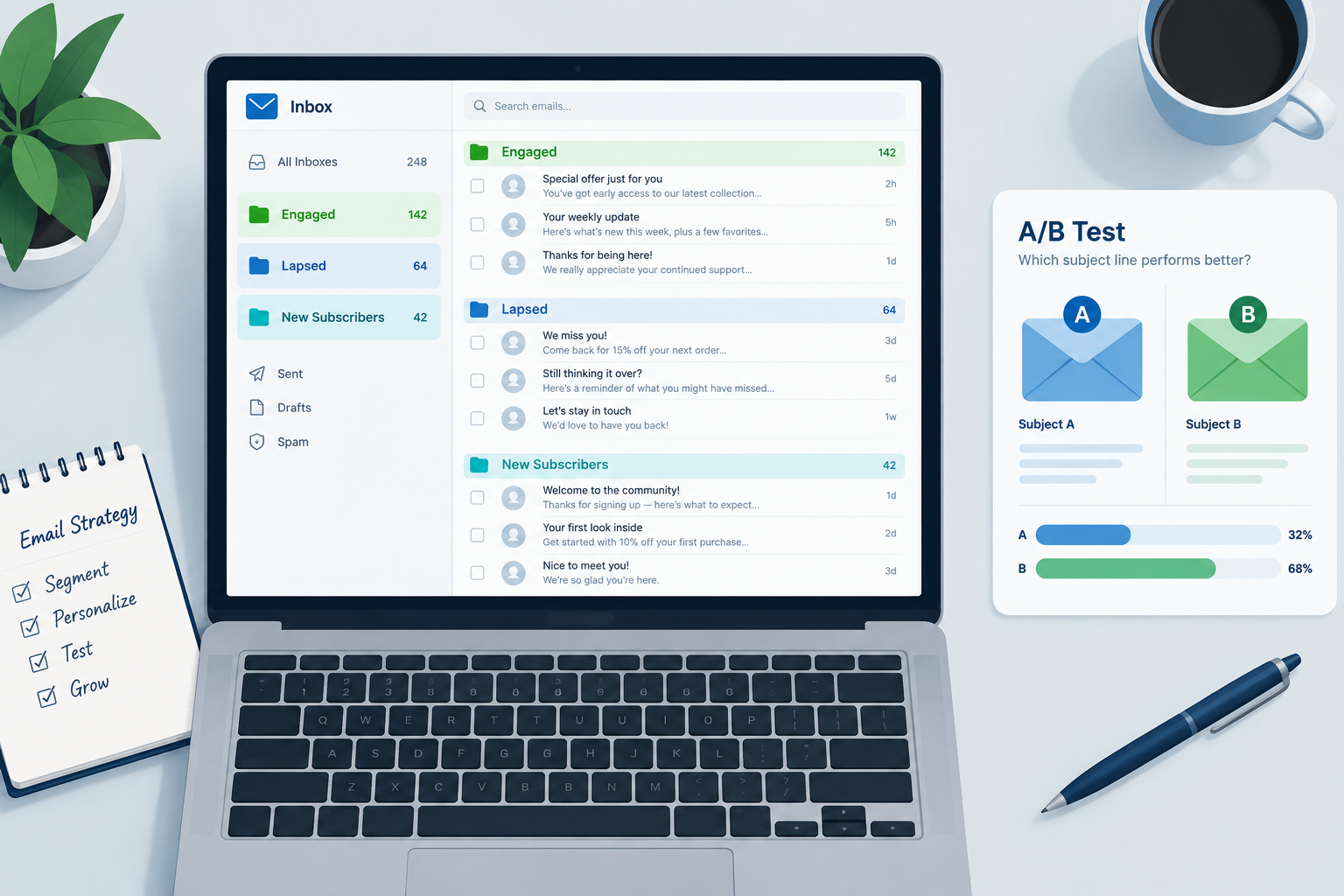
To get noticed in a crowded inbox, send fewer emails that matter more. Split your list by behavior and interest, test one thing at a time, and judge each test by clicks and conversions, not opens. Since this keynote was given, Gmail has added inbox tabs and an image proxy, Apple Mail Privacy Protection has inflated open rates, and Gmail, Yahoo and Microsoft now require bulk senders to authenticate with SPF, DKIM and DMARC, offer one-click unsubscribe and keep spam complaints low. These changes make segmentation more important today than when the talk was first given.
The summit keynote
Stefan Tornquist, then Research Director of
gave several presentations during the summit. His morning session opened the day and covered the problems every email marketer runs into.
The number one challenge email marketers face
All recipients email boxes are full. (36%)
This message showed up again in MarketingSherpa’s own coverage. Its March 2009 wrap-up of the Email Summit in Miami says Tornquist opened that event with data showing that the relevance and quality of email messages affect campaign results more than outside factors such as overall email volume. Put simply, a full inbox is not the real problem. Being one more irrelevant message in it is.
It was a strong start, and it laid a solid foundation for the
offered later that day.
Email marketing lessons from the talk
He went through a handful of email marketing lessons worth passing on. They may look basic. Still, the summit’s coverage the day before had made the point that marketers overcomplicate a lot of their marketing and forget the fundamentals.
- Newsletters still work!
- SPAM is in the eye of the beholder
- Reputation is also in the eye of the beholder
- Raising Opens and Clicks (High Segmentation is KEY)
- Vary your Templates
- Top Tests
-Conversion rates 10-50% higher when removing navigation links! Creative designers will fight this, but demand it
-Repeat the main message on the landing page raised conversion rates up to 60% - Testing is the Best Metric
The main action item: invest in technology
Tornquist’s main action item was “Invest in TECH.” He said updating your technology is essential, and that success comes down to how well you segment your database.
That advice still holds, but “tech” means something different now. At the time it meant an email platform that could store subscriber data and split lists. In 2026 it also covers authentication records, mailbox provider dashboards such as Google Postmaster Tools, and reporting that doesn’t depend on open tracking.
What changed since this talk
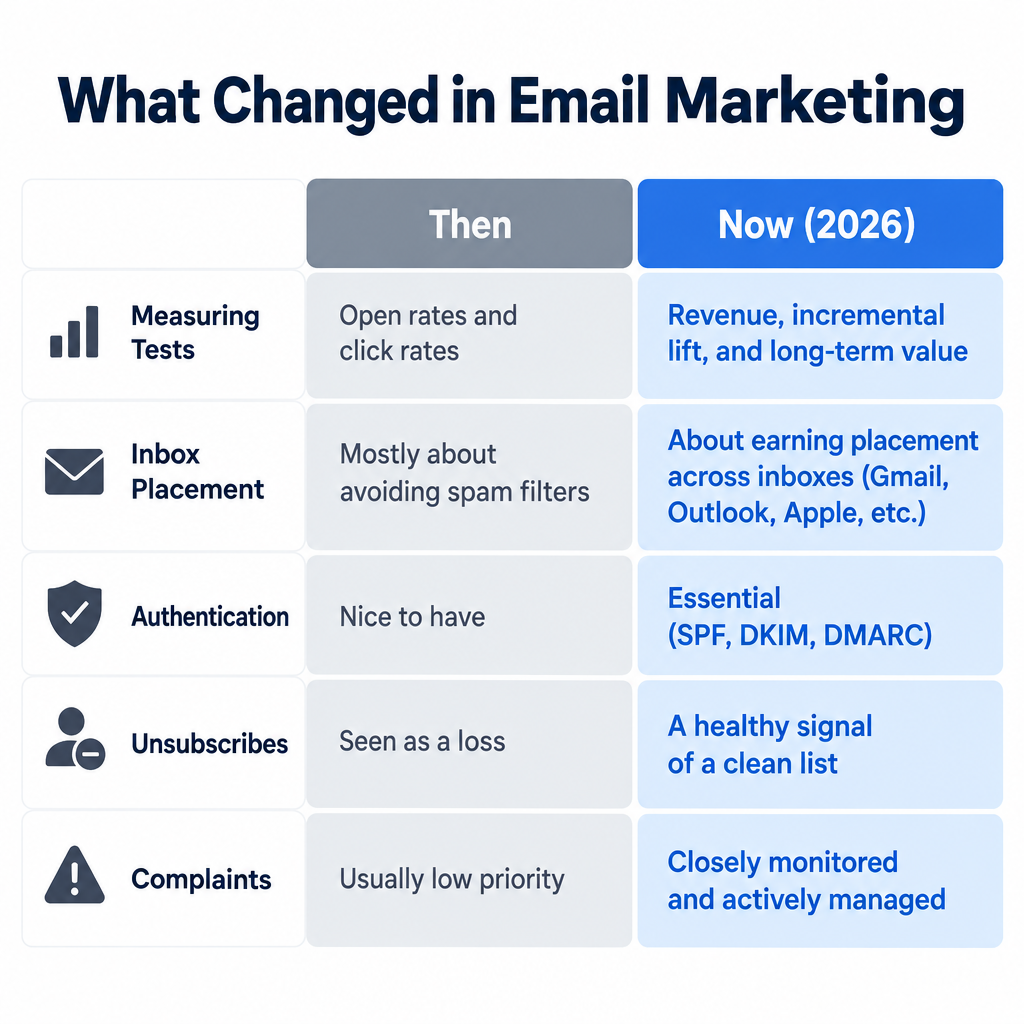
Testing and segmentation are still the fundamentals. What has changed is how you measure them and what happens if you skip them. The table below sets the old assumptions next to the rules that apply today.
| Area | Then | Now (November 2026) |
|---|---|---|
| Measuring a test | Open rate was the main metric | Apple Mail Privacy Protection, launched with iOS 15 in 2021, preloads tracking pixels, so Apple Mail opens are logged whether or not anyone reads the email. Use clicks and conversions instead |
| Inbox placement | One inbox, with rendering quirks in clients like Outlook 2007 (now history) | Gmail sorts mail into Primary, Promotions and other tabs, and serves images through its own proxy |
| Authentication | Optional extras, plus paid certification schemes like Goodmail (long gone) | Gmail and Yahoo have required SPF, DKIM and DMARC from bulk senders since February 2024. Microsoft added the same for Outlook.com, Hotmail.com and Live.com on May 5, 2025 |
| Unsubscribes | A footer link | One-click unsubscribe headers have been required for bulk marketing mail at Gmail and Yahoo since June 2024, along with a visible link and removal within two days |
| Complaints | Watched loosely | Google says to keep your spam rate below 0.1% and never let it reach 0.3%. Yahoo uses 0.3% as its threshold |
Why segmentation now protects deliverability
Segmentation used to be about relevance. Today it is also how you stay within mailbox provider limits. When you send to people who stopped engaging months ago, you get more spam complaints, and once your rate gets close to 0.3%, Gmail can send your mail to spam or reject it outright. Splitting out engaged subscribers, recent buyers and lapsed contacts lets you send more often to the people who want your mail and less often to everyone else.
Google classes you as a bulk sender once you send close to 5,000 or more messages to personal Gmail accounts within a 24-hour period. Its sender guidelines FAQ says the status never expires once it applies. Microsoft uses the same 5,000-a-day line for its consumer domains. Yahoo publishes no numeric threshold.
The records and headers bulk senders need
A minimal DMARC record, published as a TXT record at _dmarc on your sending domain, looks like this:
_dmarc.example.com. TXT "v=DMARC1; p=none; rua=mailto:[email protected]"
p=none is the minimum Google, Yahoo and Microsoft accept. Your SPF or DKIM domain also has to align with the domain in your visible From address. One-click unsubscribe follows RFC 8058, which specifies two separate headers: a List-Unsubscribe header containing your unsubscribe URL and a List-Unsubscribe-Post header:
List-Unsubscribe: <https://example.com/unsubscribe?id=abc123>
List-Unsubscribe-Post: List-Unsubscribe=One-Click
Whether your email platform adds these headers for you depends on the platform. Check a raw copy of one of your own campaigns to confirm they are there.
How to run a test that still means something
- Pick one variable: subject line, offer, send time or call to action.
- Split a segment at random, and make each group large enough to produce a meaningful number of clicks.
- Choose the winner by click rate, click-to-open rate within non-Apple opens, or revenue, not by raw opens.
- Keep a holdout group that receives nothing. It shows whether the campaign caused the result or just took credit for it.
- Write down the result and test the next variable. One test teaches you very little.
FAQ
Are open rates still useful for A/B testing?
Only in a limited way. Apple Mail Privacy Protection logs opens even when nobody reads the email, so the more Apple Mail users on your list, the more your opens are inflated. Base decisions on clicks, conversions and revenue, and treat opens as a rough signal at most.
What is the simplest way to segment an email list?
Start with engagement and recency. Separate people who clicked or bought in the last 90 days from those who haven’t, then add one interest or purchase-history field. Three or four useful segments beat a dozen your team can’t keep up with.
Do the Gmail and Yahoo sender rules apply to small senders?
Every sender needs SPF or DKIM, valid DNS, TLS and a low spam rate. The stricter rules (SPF and DKIM together, DMARC, alignment and one-click unsubscribe) apply to bulk senders, which Google defines as senders that send close to 5,000 or more messages to personal Gmail accounts within a 24-hour period. Small senders should set them up anyway, because it costs little and helps inbox placement.
How often should you email each segment?
Base it on how each segment behaves, not on one schedule for the whole list. Engaged subscribers can usually take more frequent mail. Lapsed contacts should get less, followed by a re-engagement series and then removal if they don’t respond. Watch your spam rate in Google Postmaster Tools after any change in frequency.
Does CAN-SPAM require one-click unsubscribe?
No. CAN-SPAM, enforced by the US Federal Trade Commission, requires a clear way to opt out, honored within 10 business days, plus accurate header information and a valid physical postal address. One-click headers and two-day removal are mailbox provider rules from Gmail and Yahoo, so commercial senders in the US have to follow both.
Sources
- Google: Email sender guidelines
- Google: Email sender guidelines FAQ
- Yahoo Sender Hub: Sender best practices
- Microsoft Tech Community: Outlook’s new requirements for high-volume senders
- FTC: CAN-SPAM Act, A Compliance Guide for Business
- Litmus: Apple’s Mail Privacy Protection and what it means for email marketers
- MarketingSherpa: 8 takeaways on segmentation, triggered campaigns and testing (March 2009)