
Double opt-in is still the cleanest way to build a list in November 2026, but one signup should trigger one confirmation email, even when the subscriber picks several newsletters. Ask for all the choices on the form, confirm the address once, and follow up with a single welcome message that covers everything they chose. The big change since this post was written is that mailbox providers now police list quality directly. Gmail and Yahoo’s 2024 bulk sender rules require SPF, DKIM, DMARC, one-click unsubscribe and a spam rate under 0.3%, and Microsoft’s Outlook.com applied similar authentication rules from May 5, 2025. That makes a clean, confirmed list more valuable than ever, and a pile of extra confirmation emails more irritating than ever.
The signup that sent four emails in two minutes
A traveler planning a few days in San Francisco with family in October had not booked a flight yet. The first step was comparing fares and layovers.
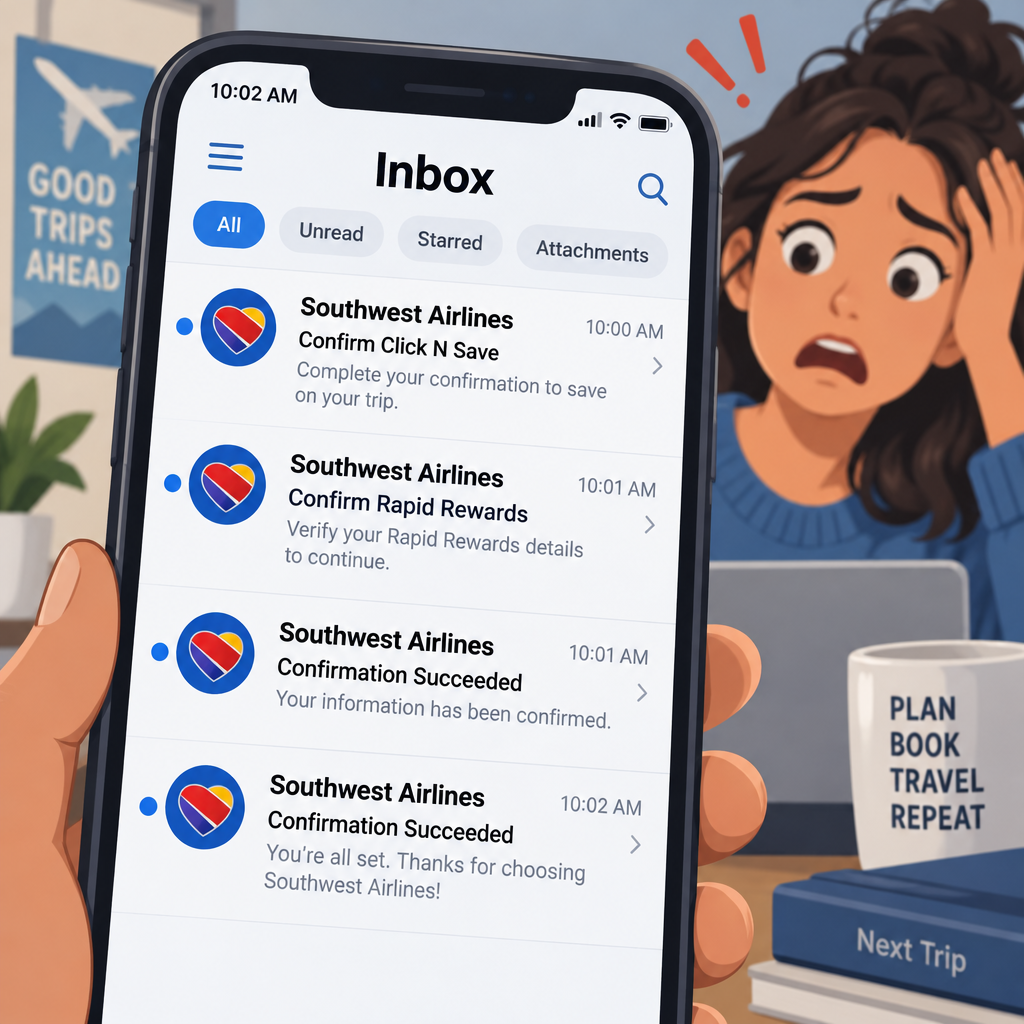
Southwest made the shortlist, partly because of its Rapid Rewards loyalty program. During Rapid Rewards registration, the form offered two separate email programs. One was Click ‘N Save, Southwest’s long-running sale and fare-deal email. The other was the Rapid Rewards update.
Each program then sent its own double opt-in message. After both links were clicked, two “Confirmation Succeeded” messages followed.
That made four emails in two minutes, all of them administrative messages from a single signup.
Why double double opt-in is overkill
Double opt-in itself is good practice. Confirming twice for one signup goes too far. A better flow sends one double opt-in message that covers both programs, then one well-written welcome email that reminds the subscriber why they signed up.
The extra emails cost more than patience. Each one is another chance for the subscriber to ignore a message, lose it in a Gmail tab, or decide the brand sends too much. Southwest has changed its email programs and preference pages many times since then. Its official Rapid Rewards email page now describes subscriptions you can manage at any time, and changing the subscribed address means unsubscribing and subscribing again with the new one. Still, the lesson from this signup holds for any brand with more than one list.
What a better flow looks like in 2026
Most email service providers let you build this flow without custom code. Mailchimp, for example, sets audiences to single opt-in by default. You can tick “Enable double opt-in” under the audience’s Settings, then “Audience name and defaults,” and offer separate newsletters as groups or tags inside one audience. That way one confirmation covers every choice.
- Put every list choice on the signup form as checkboxes, with clear names and how often each one is sent.
- Send one confirmation email that lists what the person selected.
- Skip a separate “confirmation succeeded” email. Show a success page in the browser instead.
- Send one welcome email that delivers on each choice, for example this week’s fare deals plus a link to the loyalty account.
- Let subscribers change list choices later from a preference center, not by signing up again.
If you do have to keep lists on separate systems, still group the confirmations. One email with two clearly labeled confirm buttons beats two emails sent seconds apart.
Why confirmed lists matter more now
Confirmed lists protect the numbers mailbox providers now watch. Google asks senders of more than 5,000 messages a day to Gmail accounts to keep the spam rate shown in Postmaster Tools below 0.3%, and senders only qualify for mitigation once they stay under that line for seven days in a row. Yahoo’s Sender Hub lists the same 0.3% ceiling, and both providers want unsubscribe requests honored within two days.
Double opt-in keeps typos, fake signups and spam traps off your list, so complaints and bounces stay low. It also gives you a timestamped record of consent. That record matters under GDPR in Europe, which requires you to be able to show consent. CAN-SPAM in the US does not require opt-in at all, but it does require a working opt-out, and the FTC can fine up to $53,088 for each email that breaks the law.
One measurement caveat: since Apple Mail Privacy Protection arrived in 2021, opens no longer prove that a subscriber is engaged. Judge your confirmation and welcome emails on clicks and confirmation rate, not on opens.
FAQ
Is double opt-in legally required in the US?
No. CAN-SPAM lets you email people without prior consent, as long as you identify yourself honestly, include a physical address and honor opt-outs. Double opt-in is a deliverability and list-quality choice, not a US legal requirement. Some countries and their courts, Germany in particular, treat it as the safest way to prove consent.
Do Gmail and Yahoo require double opt-in?
Neither one makes double opt-in a formal requirement. They do require authentication, one-click unsubscribe for marketing mail and a spam rate below 0.3%, which are much easier to meet with a confirmed list. Lists built from purchased or scraped addresses are the quickest way to break those limits.
Should each newsletter have its own confirmation email?
No. Collect all list choices on one form and confirm them with a single email. Separate confirmations seconds apart confuse people, lower the share who confirm everything they wanted, and make your brand look like it sends too much before the first real email arrives.
Do confirmation emails need a one-click unsubscribe link?
Google and Yahoo’s one-click rules apply to marketing and promotional messages, and transactional mail is excluded. A confirmation request is usually treated as transactional, but the welcome email and everything after it should carry a List-Unsubscribe header that supports one-click unsubscribe, ideally the RFC 8058 POST method.
What should a welcome email include after double opt-in?
Remind the subscriber what they signed up for and how often each list is sent, and deliver something useful right away, such as a current offer or a top resource. Add a link to the preference center so they can change their choices without unsubscribing from everything.
How fast should the confirmation email arrive?
Within a minute or two, while the person still has the signup in mind. Delays push confirmation rates down. Send confirmations through an authenticated stream that passes SPF, DKIM and DMARC so they land in the inbox and not in spam.
Sources
- Google: Email sender guidelines and Postmaster Tools help
- Yahoo Sender Hub: Best practices for senders
- Microsoft: Outlook.com high-volume sender requirements and the 550 5.7.515 bounce help article
- Federal Trade Commission: CAN-SPAM Act, a compliance guide for business
- Mailchimp (Intuit) help center: About double opt-in and audience opt-in settings
- Southwest Airlines: Rapid Rewards email subscriptions page