
Email works best as a conversation. You ask subscribers what they want, you tell them about changes before they run into them, and you make replying, choosing preferences and unsubscribing easy. As of November 2026 this is close to a requirement: since February 2024, Gmail and Yahoo require bulk senders to authenticate their mail, offer one-click unsubscribe and keep spam complaints low, and Microsoft added similar rules for Outlook.com in May 2025. Opens also stopped being a reliable sign that anyone is listening once Apple Mail Privacy Protection started inflating them in 2021, so replies, clicks and stated preferences are now the most dependable feedback you have.
A salad that disappeared without warning
This post kept to the food theme of the previous one, and the example still holds up. Crispers was a casual Florida restaurant chain serving salads, soups, wraps, sandwiches and flatbreads at lunch and dinner, and it was a lot like Panera Bread. It was founded in Lakeland in 1989, bought by Publix in 2007, and sold in 2011 to Healthy Food Concepts, a company backed by the investment firm Boyne Capital. The chain shrank over the following decade, and its last four restaurants, in Lakeland, Winter Haven and Brandon, closed in October 2022.
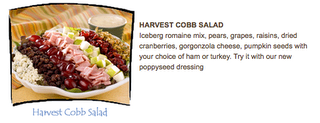
When this story was first written, the chain was still open. A regular came in at lunch wanting the usual order, the Harvest Cobb Salad. At the counter they got a new menu and heard that some old items had been dropped. The Harvest Cobb was one of them.
The customer was disappointed. They had come in for that one salad and now had to pick something else. The new dish was good, but it wasn’t what they wanted.

What the restaurant could have done with email
The salad story shows exactly why email has to work in both directions. The restaurant made a change that its most loyal customers cared about, and those customers found out at the counter.
This customer wasn’t on the mailing list, so they had no way to hear about it. A subscriber could have been treated very differently. Two simple emails would have done it:
- Before the change: a short “vote for the dishes you want to keep” email. Fans of the Harvest Cobb would at least have had a say, and the restaurant would have learned which items people really loved.
- When the change happens: a “new menu, here’s what’s leaving” email, so regulars walk in knowing what to expect.
Even if the salad had been cut anyway, the customer would have felt heard and come in with the right expectations. That goodwill is worth more than one menu item.
The customer signed up the next day so they would hear about future menu updates, including any comeback for the salad. That was the right instinct, but it puts the work on the customer. A good program asks first and announces early, so customers don’t have to chase the news.
What two-way email looks like in 2026
Two-way email means every message gives the subscriber an easy way to respond, and someone actually reads and acts on those responses. The tools have changed a lot since this story first ran, but the idea hasn’t.
Ways to invite a response
| Method | What it tells you | Best used for |
|---|---|---|
| Polls and one-click votes | What subscribers prefer, right now | Menu, product or content decisions |
| Preference center | Which topics and how often each person wants | Cutting unsubscribes and complaints |
| A reply-to inbox someone monitors | Free-form feedback, questions, complaints | Welcome emails, announcements |
| Short surveys after a visit or purchase | Satisfaction and what to fix | Restaurants, retail, service businesses |
| Clicks on links for specific topics | What people are interested in | Segmenting future sends |
A restaurant in the same position today would send a two-link poll (“Keep it” or “Retire it”) for each dish under review. That takes one click, and it doubles as a signal of who is engaged.
Answer the replies you ask for
If you invite replies and nobody answers, the conversation ends there. Send from an address people can actually reply to, send those replies to a named person or a shared inbox, and set a response time your team can keep. A “noreply” sender tells subscribers you don’t want to hear from them, which is the opposite of what this page argues for.
Set expectations in the welcome email
The welcome email is where you tell people what you’ll send and how often. A line such as “We’ll email you when the menu changes and once a month with specials” sets a promise you can keep. The FTC’s CAN-SPAM guide also requires every commercial email to include a clear way to opt out and a valid physical postal address, and opt-out requests must be honored within 10 business days. The FTC lists penalties of up to $53,088 per violating email after its January 2025 inflation adjustment.
Why listening now affects deliverability
Subscribers who feel ignored stop opening, then report your mail as spam, and mailbox providers now penalize that directly. Two-way habits used to be good manners. Since 2024 they also protect your inbox placement.
The Gmail, Yahoo and Microsoft sender rules
| Provider | Applies to | Key requirements | In force since |
|---|---|---|---|
| Gmail | Senders of 5,000+ messages a day to Gmail accounts | SPF, DKIM and DMARC; one-click unsubscribe on marketing mail; spam rate kept under 0.3% (target below 0.1%) | February 2024, one-click unsubscribe by June 1, 2024, stricter enforcement from November 2025 |
| Yahoo | Bulk senders (no published threshold) | SPF, DKIM and DMARC; one-click unsubscribe on marketing mail; complaint rate under 0.3% | February 2024, one-click unsubscribe from June 2024 |
| Microsoft Outlook.com | Senders of 5,000+ messages a day to Outlook.com, Hotmail and Live addresses | SPF, DKIM and a DMARC policy of at least p=none aligned with the From domain | May 5, 2025 |
Google and Yahoo both say unsubscribe requests should be processed within two days. That is far faster than the 10 business days CAN-SPAM allows, so plan around the two-day rule.
One-click unsubscribe works through two message headers, which most email platforms add for you:
List-Unsubscribe: <https://example.com/unsubscribe?id=abc123>, <mailto:[email protected]>
List-Unsubscribe-Post: List-Unsubscribe=One-Click
A minimal DMARC record, published as a TXT record at _dmarc.example.com, looks like this:
v=DMARC1; p=none; rua=mailto:[email protected]
Start with p=none so you can read the reports, then move to quarantine or reject once you know all your legitimate mail passes.
Easy exits make the conversation healthier
It sounds backwards, but making it easy to leave is part of listening. A subscriber who can unsubscribe in one click, or switch from weekly to monthly in a preference center, won’t need to hit “Report spam.” Gmail’s Manage subscriptions view, launched in July 2025, lists the senders that email someone most often and lets them unsubscribe from each in one tap. Low-value mail gets cut quickly, and that is one more reason to send only what people asked for.
Measuring whether subscribers are actually listening
Use clicks, replies, poll votes and conversions to judge engagement, not opens. Apple Mail Privacy Protection, introduced with iOS 15 in 2021, loads email images, including tracking pixels, through Apple’s servers whether or not the person reads the message. That makes Apple Mail users look like they opened everything.
For the menu-change example, these numbers matter most:
- Poll participation: how many subscribers voted, and which dishes won.
- Click-through on the “new menu” email: whether people looked at the changes.
- Replies: the comments a vote can’t capture, like “please bring back the Harvest Cobb.”
- Unsubscribe and spam complaint rates after the change: a spike means the message, or the change itself, went down badly.
- Visits or redemptions: whether a coupon in the announcement brought people back.
The honest counter-argument is that two-way email takes staff time. Someone has to read replies, tally votes and act on them, and a small restaurant may not have that person. The fix is to start small. One poll before a big decision and one monitored reply-to address cover most of the value. A full survey program can wait.
The takeaway for any business with regulars
Before your next change, whether it’s a dropped product, a new price or new opening hours, send your list an email that asks or tells them first. Customers who hear about it at the counter feel let down. Customers who got a vote, or at least some warning, feel like insiders, and they keep opening your mail.
FAQ
What does two-way email communication mean?
It means your emails invite a response and you act on it. That covers polls, surveys, preference centers, a reply-to address that a person reads, and clear opt-outs. The opposite is one-way broadcasting from a “noreply” address with no way to give feedback.
Should marketing emails come from a noreply address?
No. A noreply sender blocks the easiest feedback channel you have and signals that replies aren’t welcome. Use a real address and route replies to someone who can answer within a set time.
Are open rates still useful for measuring engagement?
Only as a rough trend. Apple Mail Privacy Protection preloads images, including tracking pixels, so opens from Apple Mail users are inflated. Clicks, replies, poll votes and conversions show real interest much more reliably.
Do Gmail and Yahoo require one-click unsubscribe?
Yes, for bulk marketing mail. Gmail required senders with an existing unsubscribe link to add one-click unsubscribe by June 1, 2024, and Yahoo began enforcing it the same month. Both expect unsubscribe requests to be processed within two days, and transactional messages such as receipts are exempt.
How should a business announce a product or menu change by email?
Send two messages if you can. The first one asks for input or gives advance notice. The second one confirms the change, explains it in plain words and offers a reason to come back, such as a new item or a discount. Keep the reply-to address open, because the people who answer are often your most loyal customers.
What spam complaint rate is too high?
Google says to keep your user-reported spam rate below 0.1% and never let it reach 0.3%. Yahoo also uses 0.3% as its limit. If you go over it, your mail is more likely to land in spam or be rejected.
Sources
- Google Workspace Admin Help: Email sender guidelines and the Email sender guidelines FAQ
- Google Workspace Updates: Manage email subscriptions in Gmail (July 2025)
- Yahoo Sender Hub: Sender Best Practices and FAQs
- Microsoft Tech Community: Strengthening Email Ecosystem, Outlook’s New Requirements for High-Volume Senders (April 2025)
- Federal Trade Commission: CAN-SPAM Act, A Compliance Guide for Business
- Postmark Support: Open tracking and Apple Mail Privacy Protection
- Crispers (restaurant), Wikipedia, and The Ledger’s report on the chain’s closure