
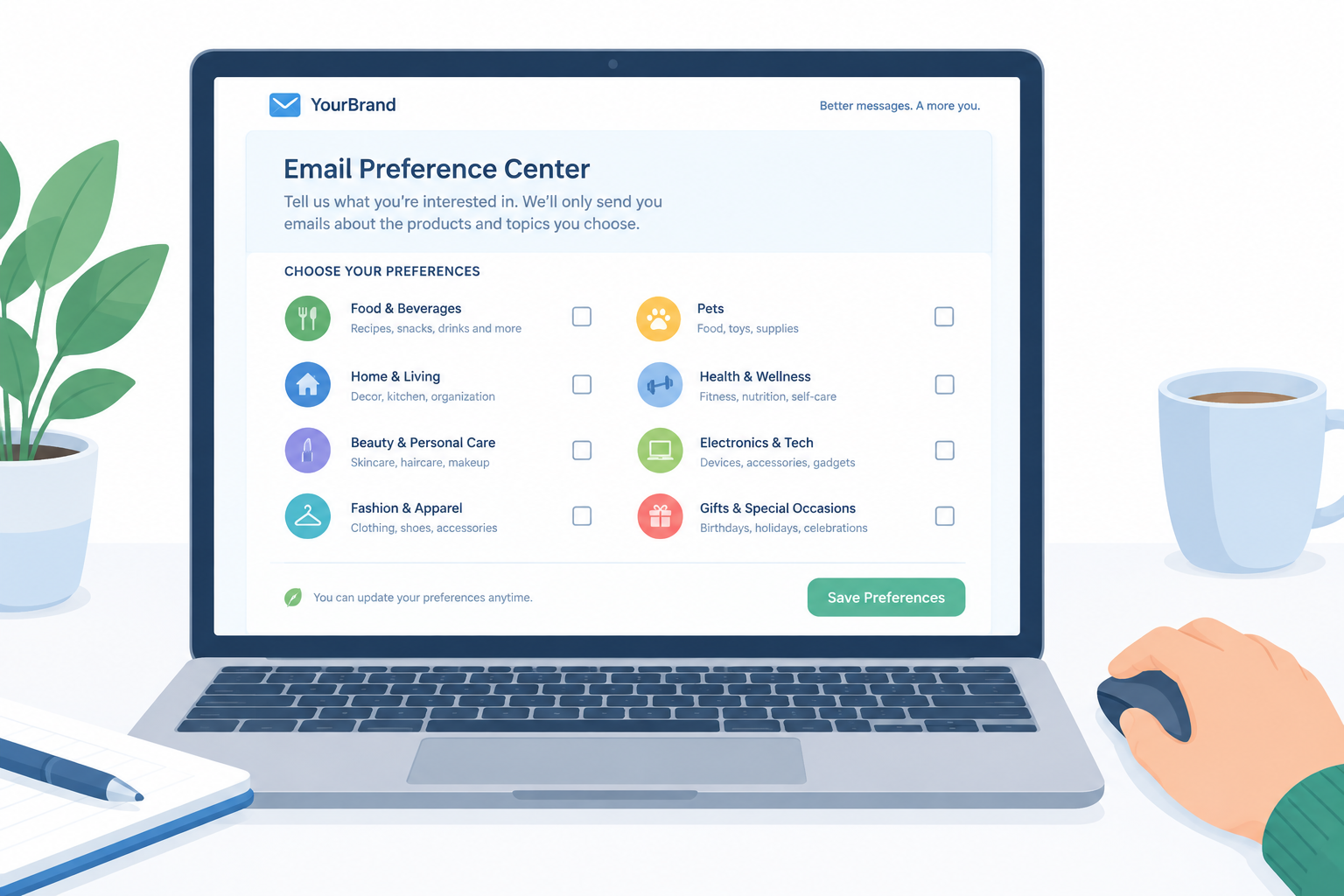
Brands with lots of product lines get better results when they ask subscribers which brands or topics they want, use an unticked checkbox to get consent, and then send only what each person picked. They also need a preference center where people can change topics or frequency, alongside an unsubscribe that works in one click. Since this post was first written, the rules have changed in two ways. Since 2024, Gmail and Yahoo require bulk senders to offer one-click unsubscribe and keep spam complaint rates below 0.3%. Apple Mail Privacy Protection now inflates open rates, so opens are no longer a reliable way to guess what someone wants. Asking people directly matters more now than it did when the story below took place.
A complaint handled well
One summer a shopper bought a half gallon of Cookies and Cream ice cream and found plenty of cream and almost no cookies. She went online to tell the company and found that the brand belonged to the Unilever family.
The site had a section for product concerns, so she reported the problem. A few days later an apology letter arrived with a coupon for a free half gallon. That was a nice touch, and it suggests that sending apology coupons was a standard process at the company.
Unilever’s email marketing, with one exception, was much less consistent.
The brand has changed hands since then. In December 2025 Unilever demerged its ice cream business, and Breyers now belongs to The Magnum Ice Cream Company, which trades in Amsterdam, London and New York. The email lesson from this story has not changed.
Why a wide product range calls for segmentation
Is it hard to settle on an email strategy when a company makes everything from mayonnaise to laundry soap? That depends on how it is managed. A wide range should actually make segmentation easier, because the brands themselves give you ready-made categories to offer subscribers.
The sign-up form and the pre-checked box
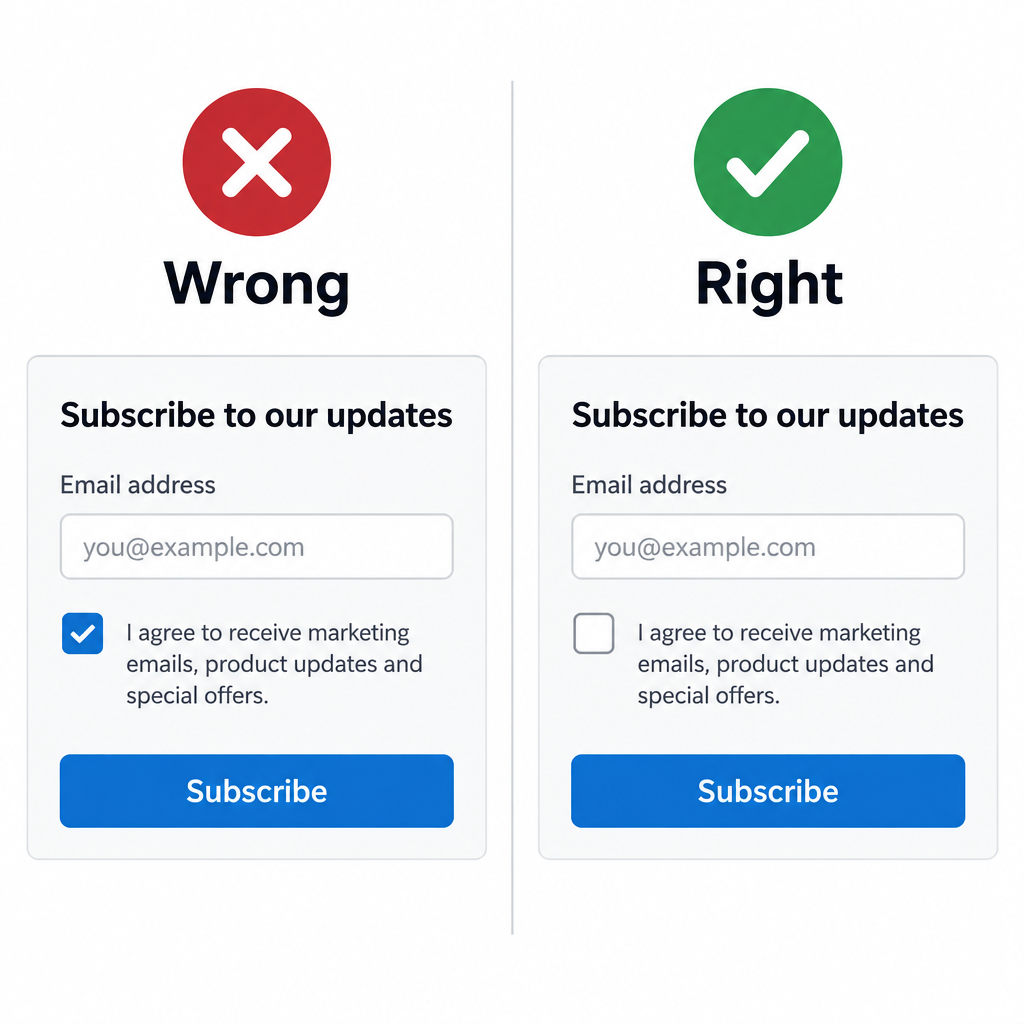
When the company collected her contact details, this statement appeared in the small print:
Helping you with your everyday needs is important to us. Therefore, from time to time, we may wish to send you information, samples or special offers that we feel may be of interest to you regarding Good Humor-Breyers, or other complementary brands from Unilever or other carefully selected companies. If you would rather not receive such information and offers, please check the appropriate box below…
The “Yes” box was already checked. To be fair to Unilever, the form offered a third choice besides the standard “Yes” and “No”: receive offers and information from Good Humor-Breyers only. Curiosity won. What would show up if the “Yes” box stayed checked?
Pre-checked consent boxes were common at the time, but they are a poor choice today. In the US, CAN-SPAM does not require opt-in consent, so a pre-ticked box is not illegal there. Under the EU’s GDPR, silence, pre-ticked boxes or inactivity do not count as consent. The Court of Justice of the European Union confirmed this in its October 2019 Planet49 ruling. For any list that includes EU or UK subscribers, leave the boxes unticked and let people choose.
What actually arrived in the inbox
Over the following months a handful of emails arrived. There were fewer than expected, and no clear logic decided which brand sent what.
One of Unilever’s bath soap brands mailed fairly consistently. That worked. She already used the brand, and the steady schedule showed that someone was thinking about it.
The messages from the other brands were more puzzling. One of the first Unilever emails promoted its diet product line. Unilever’s diet brand at the time was Slim-Fast, which it sold to the Dallas private equity firm Kainos Capital in July 2014. Was that a hint? She had signed up on an ice cream site. She was also a long-distance runner who watched what she ate and had no interest in diet products. Unilever had no way to know that, because it never asked.
Emails for other Unilever products arrived too. Each one left her wondering why it had been sent, until she scrolled to the footer and saw Unilever’s name.
Ask, then send by preference
Unilever did itself and its customers a disservice. With a product range that varied, the obvious move was to ask people what interested them and then send messages based on those answers. Someone might want pasta sauce emails and not care at all about fabric softener. (The pasta sauce example is history now too. Unilever sold its North American Ragu and Bertolli business to Japan’s Mizkan Group in 2014 for about $2.15 billion.)
Preferences combined with a consistent schedule are a strong way to keep subscribers engaged. Random messages about random products lead to more opt-outs. Today they also lead to spam complaints, and those count against your sender reputation:
- Gmail and Yahoo: Since February 2024, anyone sending more than about 5,000 messages a day to Gmail must authenticate with SPF, DKIM and DMARC and keep the spam rate shown in Postmaster Tools below 0.3%. Since June 2024, marketing mail must also support one-click unsubscribe through the List-Unsubscribe header, and unsubscribes must be honored within two days. Yahoo’s Sender Hub sets the same baseline.
- Microsoft Outlook: Since May 5, 2025, domains sending more than 5,000 messages a day to Outlook.com, Hotmail and Live.com addresses must pass SPF, DKIM and DMARC. Mail that fails can be sent to Junk.
- CAN-SPAM: Opt-outs must be honored within 10 business days. Each email that breaks the law can cost up to $53,088 under the FTC’s January 2025 inflation adjustment.
A preference center gives subscribers who are tired of one brand a choice short of unsubscribing from all of them. Gmail and Yahoo still require the one-click unsubscribe to work on its own, so the preference center must be an extra option and must never be the only exit.
A side note from the original story: in all those months, not one email about ice cream ever arrived. The one brand she had actually signed up for was the one that stayed silent.
FAQ
What is an email preference center?
A preference center is a page where subscribers choose which topics, brands or frequencies they want from you. Most ESPs, including Mailchimp, Klaviyo and HubSpot, build it from list fields, groups or subscription types. You can link to it from the footer of every email and from your welcome email.
Can a preference center replace the unsubscribe link?
No. Gmail and Yahoo require bulk senders to support one-click unsubscribe through the List-Unsubscribe header, and that click must remove the person without making them log in or fill in a form. You can still put a “manage preferences” link next to the unsubscribe link in the footer.
Are pre-checked opt-in boxes legal?
In the US, CAN-SPAM does not require prior consent, so a pre-checked box does not break that law on its own. Under the GDPR, pre-ticked boxes do not count as valid consent, which the CJEU confirmed in the 2019 Planet49 case. If any of your subscribers are in the EU or UK, use unticked boxes.
How many preference options should a sign-up form offer?
Keep the sign-up form short, usually three to six clear topic or brand choices. Collect more detail later through the preference center or a quick survey in a follow-up email. A long grid of checkboxes on a first-visit form tends to lower sign-ups.
Can open rates show what subscribers are interested in?
Not reliably. Apple Mail Privacy Protection, launched with iOS 15 in September 2021, preloads images, so many Apple Mail users register opens they never made. Use clicks, purchases and stated preferences to judge interest, and treat opens as a rough trend at best.
What happens if subscribers keep marking off-topic emails as spam?
Complaints add to your spam rate in Gmail’s Postmaster Tools, which Google calculates as user-reported spam divided by messages delivered to the inbox. Google recommends keeping that rate below 0.1% and avoiding a rate of 0.3% or higher. Sending only what people asked for is the most direct way to keep complaints low.
Sources
- Google, Email sender guidelines (Gmail Help)
- Yahoo Sender Hub, Sender Best Practices
- Microsoft, Outlook requirements for high-volume senders (Microsoft Tech Community and Outlook.com Postmaster policies)
- Federal Trade Commission, CAN-SPAM Act: A Compliance Guide for Business
- Court of Justice of the European Union, Planet49 judgment, Case C-673/17 (October 2019)
- Unilever, completion of The Magnum Ice Cream Company demerger (December 2025)