
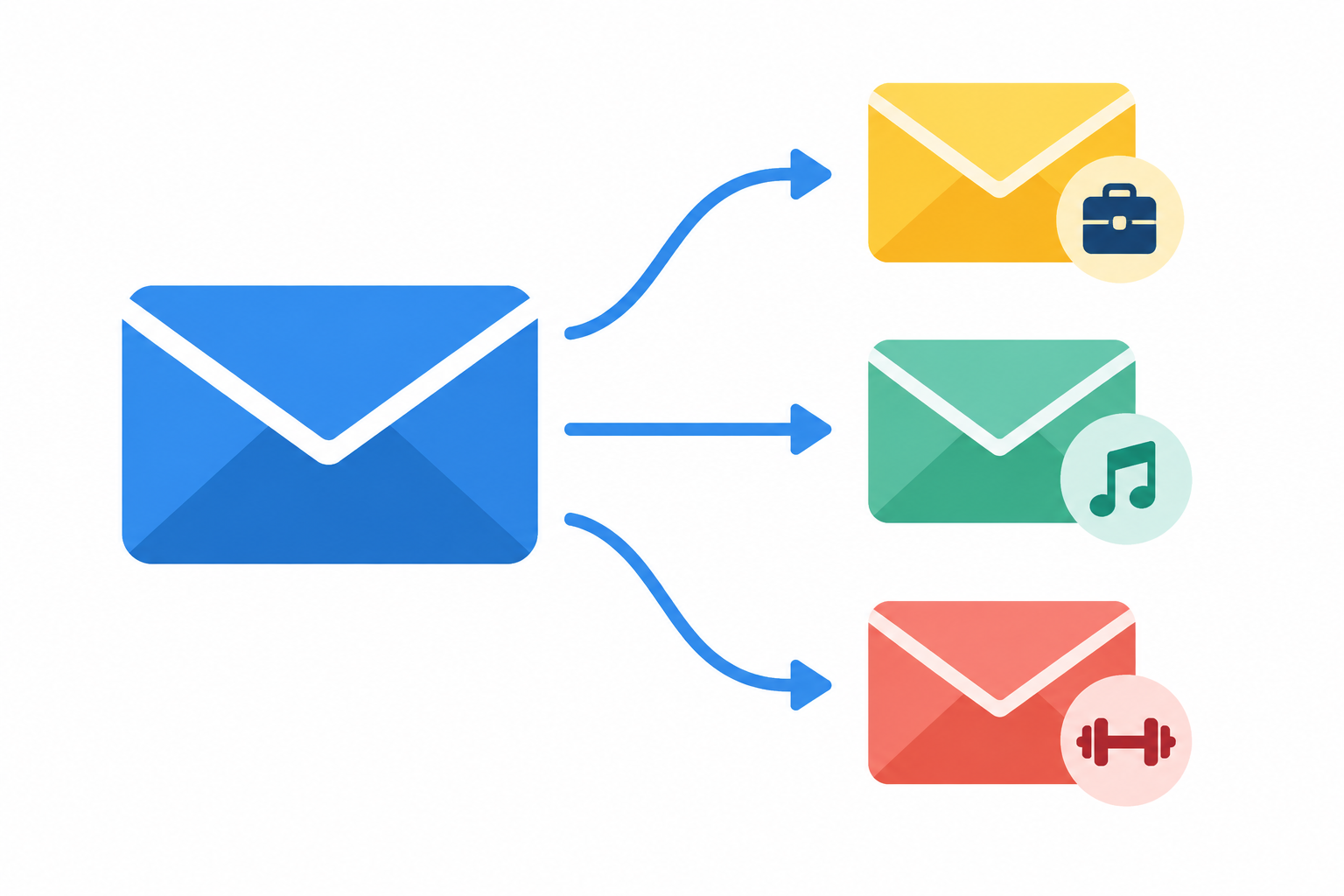
Segmentation still works best when you keep it simple. Split your list into groups by real interests and behavior, send each group something it actually wants, and judge results by clicks and conversions rather than opens. What has changed since this tip first ran: Apple Mail Privacy Protection, launched with iOS 15 in 2021, now inflates open rates. The 2024 Gmail and Yahoo bulk sender rules, followed by Microsoft’s Outlook.com rules in May 2025, also tied inbox placement to authentication, one-click unsubscribe and low spam complaint rates. Relevant, segmented mail is now one of the main ways to keep complaints low.
Today’s topic is KISS: Segmentation = Success. Your list holds CEOs and agents, punk rockers and hip-hop fans, couch potatoes and health nuts, and not all recipients are created equal. If your email marketing isn’t segmented, you can’t count on reaching anyone with a message that fits them.
Travelocity is the classic example. In an older MarketingSherpa interview, Paul Briggs, then Travelocity’s Director of Customer Loyalty and Marketing, described how his daily email program moved over about four and a half years from broad sends to 2 to 3 million people to highly segmented messages. One of those programs, the daily Low Fare Alerts, went to only about 50,000 to 60,000 names. “We had to work on deal-finding strategies for our customers… Twenty dollars on a domestic trip might be interesting to some, but it’s not going to be if you are traveling to London.” The same interview reported that these customer-controlled programs converted 8 to 12 times better than less relevant offers. Travelocity also capped how often people could be emailed, with contact rules of 7 to 14 days depending on the situation.
Define each segment as a group of people who share common interests or behavior, such as destinations browsed, products bought, or how recently they clicked. Then find out what subscribers want and give it to them. A preference center or a one-question survey is the quickest way to ask. Run subject line tests, but pick winners by clicks or conversions, because opens from Apple Mail users are recorded even when nobody reads the message. Write the copy carefully for each group. Do this and recipients won’t ask, “Why did I get this email?“ That question is the first step toward hitting the spam button. Follow this KISS tip and your email becomes something your subscribers value, which builds loyalty.
Segmentation now protects your deliverability too. Google asks senders to keep user-reported spam below 0.1% in Postmaster Tools and never let it reach 0.3%. Since November 2025, Gmail has been ramping up enforcement, and mail that doesn’t meet its sender requirements can be deferred or rejected outright. Bulk senders, which Google defines as sending around 5,000 or more messages a day to personal Gmail addresses, also need SPF, DKIM and a DMARC record, plus a one-click unsubscribe link on marketing mail. Sending to the people who want a given message is the simplest way to keep complaints under those limits.
FAQ
How many segments should a small list start with?
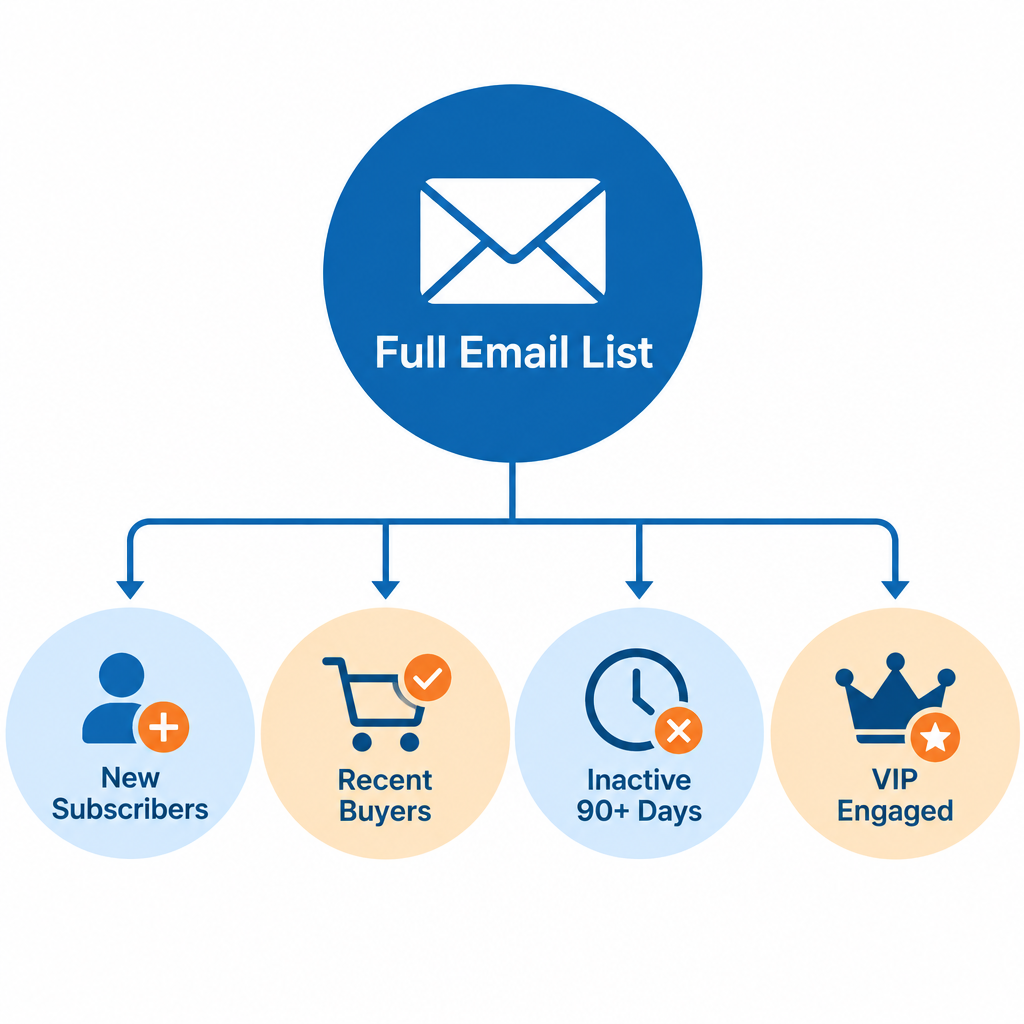
Start with two to four segments you can actually write different content for, such as new subscribers, recent buyers, and people who haven’t clicked in 90 days. Each extra segment needs its own copy and its own testing, so only add more when the results justify the work. A small number of well-run segments beats dozens of neglected ones.
Are open rates still useful for segmenting subscribers?
Not on their own. Apple Mail Privacy Protection preloads images, including tracking pixels, through Apple’s proxy servers, so many “opens” are recorded without a human reading anything. Build engagement segments on clicks, purchases, site visits and replies instead. Use opens only as a rough, secondary signal.
Does segmentation help with Gmail and Yahoo’s sender rules?
Yes, indirectly. Both Gmail and Yahoo watch spam complaint rates: Gmail wants you below 0.1% and treats 0.3% as a ceiling never to reach, while Yahoo uses 0.3% as its limit for bulk senders. Mail that matches each reader’s interests gets fewer complaints and more engagement, and that supports inbox placement. Segmentation won’t replace SPF, DKIM, DMARC and one-click unsubscribe, though. Those remain hard requirements for bulk senders.
What data can I use to segment without breaking privacy or spam laws?
Use data people gave you directly, such as signup choices, preferences and purchase history, plus engagement with your own emails. Never buy or scrape lists. Under the FTC’s CAN-SPAM rules every commercial email needs accurate header and subject lines, a physical postal address and a working opt-out that you honor within 10 business days. The FTC’s 2025 inflation adjustment, effective January 17, 2025, set the maximum penalty at $53,088 for each separate email that breaks the law, and the FTC left that amount unchanged for 2026. That figure is a ceiling, and actual penalties depend on the circumstances. If you email people in the EU or UK, GDPR also requires a lawful basis, usually consent, for marketing mail.
How often should each segment get email?
Set frequency per segment instead of mailing everyone on the same schedule. Travelocity’s 7 to 14 day contact rules show the idea: highly engaged groups can take more, and quieter groups need a lighter cadence or a re-engagement series. If complaints or unsubscribes climb in a segment, cut frequency there first.
Sources
- Google Workspace Admin Help: Email sender guidelines and the sender guidelines FAQ
- Yahoo Sender Hub: Sender best practices
- Microsoft Tech Community, Outlook blog: New requirements for high-volume senders on Outlook.com
- Federal Trade Commission: CAN-SPAM Act, A Compliance Guide for Business
- MarketingSherpa: Travelocity interview with Paul Briggs
- Postmark Help Center: Open tracking and Apple Mail Privacy Protection