
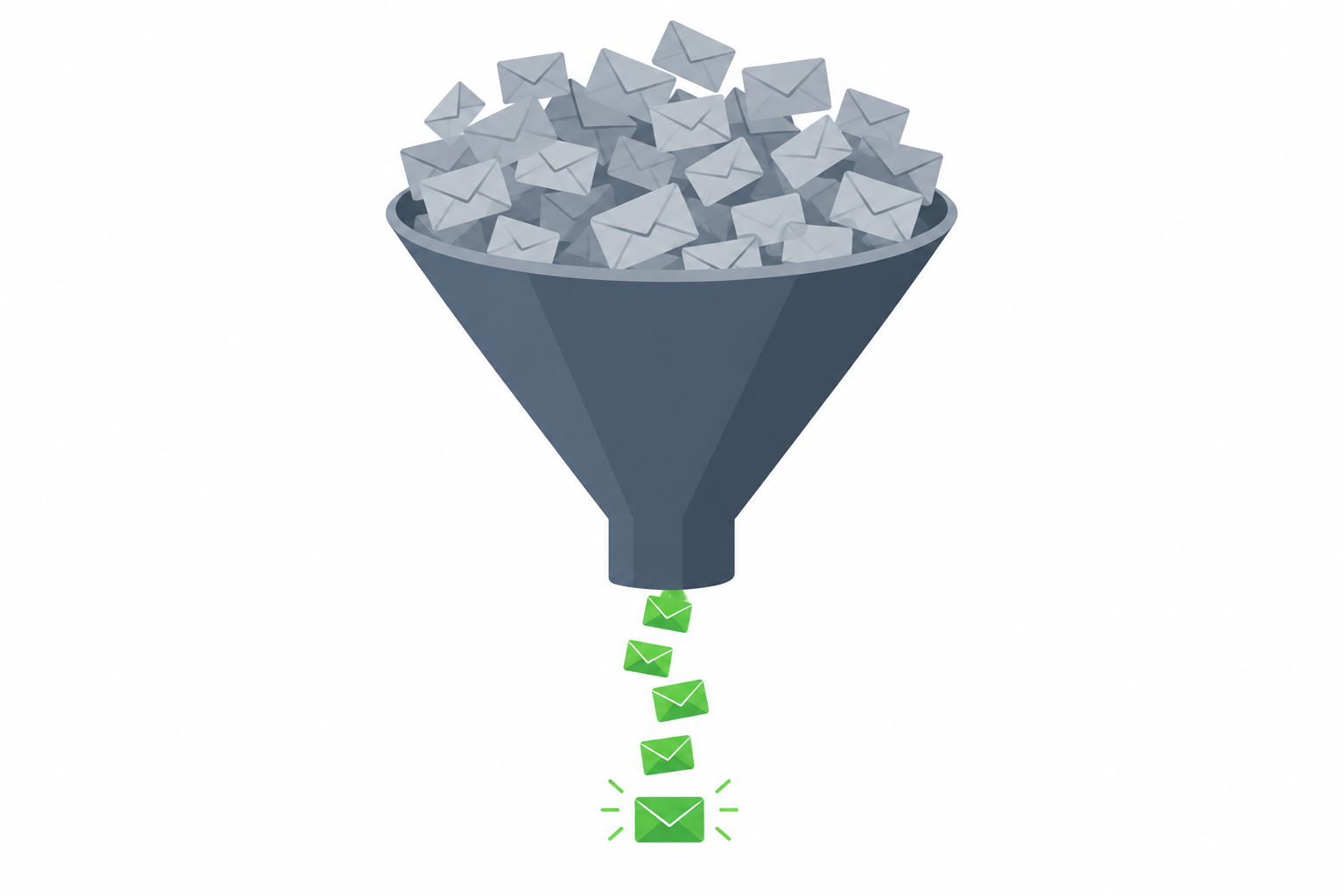
Yes, asking inactive subscribers to confirm they still want your email gives you a smaller list that responds better, and in November 2026 that matters more than it did when CBS SportsLine tried it. Gmail and Yahoo started enforcing bulk sender rules in February 2024 (SPF, DKIM, DMARC, one-click unsubscribe and a spam complaint rate held under 0.3%), and Microsoft’s Outlook.com added its own rules for high-volume senders on May 5, 2025. Under those rules, mailing people who never engage hurts your reputation. Apple Mail Privacy Protection, which arrived with iOS 15 in 2021, also inflates open counts, so judge who confirmed by clicks, not opens.
What CBS SportsLine did
CBS SportsLine removed subscribers who no longer wanted its messages but had never unsubscribed, as ClickZ reported at the time.
Patrick Herde, director of product management and marketing at CBS SportsLine, explained it this way: “In the old world, having a big list was probably a value. Now we’re more interested in active recipients.”
On April 23, CBS SportsLine sent one email to its opt-in subscribers. It told them their messages would stop unless they took action to re-subscribe by April 30. That gave subscribers one week to respond.
Why a smaller list paid off
The smaller list was worth more to CBS SportsLine’s advertisers. The people who stayed were more engaged, so they were more likely to open the messages and see the ads.
Herde did not share before-and-after numbers, but he said the list shrank from seven figures to six. “It was a pretty significant fraction,” he said.
Click Here to read the entire ClickZ article.
What has changed since then
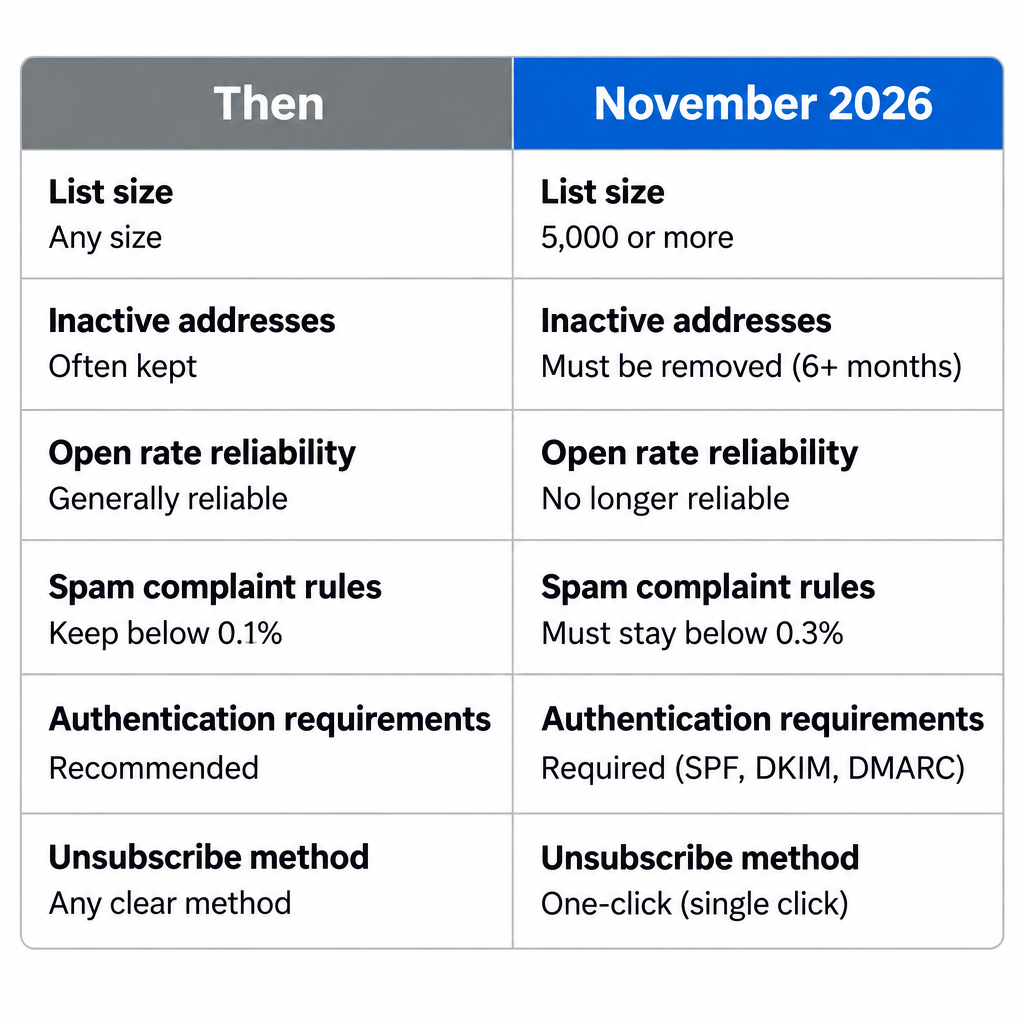
The logic still holds, but the reasons for it have changed. Back then, the payoff was mostly commercial: advertisers paid for attention, and a smaller list that actually opened its email delivered more of it. Today the main reason is deliverability. Mailbox providers now judge senders on how recipients react.
| Then | November 2026 |
|---|---|
| A big list was a selling point | Inactive addresses drag down reputation and inbox placement |
| Opens were a fair signal of interest | Apple Mail Privacy Protection preloads images and counts many unread emails as opened, and Gmail has proxied images since 2013 |
| No mailbox provider rules on complaints | Gmail and Yahoo want spam rates below 0.1% and never at 0.3% or higher |
| Authentication was optional | Bulk senders to Gmail, Yahoo and Outlook.com need SPF, DKIM and DMARC |
| Unsubscribe was a footer link | Marketing mail needs one-click unsubscribe (RFC 8058), and Gmail and Yahoo expect requests to be honored within two days |
Gmail counts you as a bulk sender once you send about 5,000 messages a day to personal Gmail accounts. Microsoft uses the same 5,000-a-day line for Outlook.com, Hotmail and Live addresses. Mail that fails its checks goes to junk first and can be rejected if the problem continues. Yahoo publishes no exact volume threshold, and its sender best practices recommend reconfirming subscribers who have stopped engaging. That is exactly what CBS SportsLine did.
How to run a re-permission campaign today
A modern version of the CBS SportsLine email follows the same idea with better targeting. These steps reflect current mailbox provider guidance:
- Define “inactive” by clicks and site activity, not opens. A common starting point is no clicks, purchases or logins in 6 to 12 months. Shorten that window if you send daily.
- Exclude Apple Mail machine opens. Most ESPs, including Braze and GetResponse, can flag or filter these opens so they don’t make dead addresses look active.
- Send a short series, not one email. Two or three messages over one to two weeks give people a fair chance. The first explains what is happening, and the last says the deadline is today.
- Make confirming one click. Use a single “Keep me subscribed” button. Leaving should be just as easy, because a hidden unsubscribe link turns into spam complaints.
- Remove or suppress non-responders on the date you announced. Keep them on a suppression list so they are not re-imported by accident.
- Watch Google Postmaster Tools and Yahoo Sender Hub afterwards. Your spam rate and reputation should improve within a few weeks.
The honest counter-argument is that some quiet subscribers still buy. They read in the preview pane or shop after seeing your subject line. If your list has strong revenue per subscriber and low complaints, a gentler sunset policy can work better than a hard cut. You would mail inactive addresses less often before removing them. If your complaint rate is near Gmail’s 0.1% guidance, the hard cut is the safer move.
FAQ
Is a re-permission campaign the same as an opt-out campaign?
Not quite, though the terms are often mixed up. A re-permission campaign, like the one CBS SportsLine ran, removes everyone who does not actively confirm. An opt-out approach keeps everyone except people who ask to leave. Re-permission gives you the cleaner list but the bigger drop in size.
How many subscribers should I expect to lose?
Expect to lose a large share of the inactive segment, not of your whole list. CBS SportsLine said only that its list went from seven figures to six. The people you lose were mostly not reading anyway, and that is why engagement and inbox placement tend to rise afterwards.
Can I still use open rates to find inactive subscribers?
Only as a rough guide. Apple Mail Privacy Protection preloads images, so many unread emails register as opens, and Gmail’s image proxy also blurs the data. Clicks, purchases, logins and replies are more reliable signs that someone is active.
Does CAN-SPAM require a re-permission campaign?
No. CAN-SPAM requires a working opt-out, an opt-out processed within 10 business days, an accurate sender identity and a physical postal address. The FTC’s January 2025 inflation adjustment set the maximum civil penalty at $53,088 for each separate email that violates the law. That figure still applies, because the FTC made no adjustment for 2026. The pressure to clean inactive addresses comes from mailbox providers like Gmail, Yahoo and Microsoft, not from the law.
How often should I clean my list?
Most senders do best with an automated rule that runs all the time, not a one-off purge every few years. Move contacts into a re-engagement series when they reach your inactivity window, and suppress them if they don’t respond. This keeps complaint rates steady without big swings in list size.
What if my list includes subscribers who never opted in?
Then a re-permission email often brings in spam complaints and spam trap hits, because those people never asked for your mail. Stop mailing addresses without clear consent, and never buy or scrape lists. Under GDPR in particular, you can’t send marketing email to EU contacts without a lawful basis.
Sources
- Google Workspace Admin Help: Email sender guidelines and Email sender guidelines FAQ
- Yahoo Sender Hub: Sender best practices and requirements
- Microsoft Outlook Postmaster: Policies, Practices, and Guidelines, and the Microsoft Tech Community announcement on high-volume sender requirements (April 2025)
- Federal Trade Commission: CAN-SPAM Act, A Compliance Guide for Business
- Federal Register: FTC Adjustments to Civil Penalty Amounts (January 2025) and 2026 notice of no adjustment
- GetResponse Help Center: Apple Mail Privacy Protection and deliverability
- Braze: Deliverability indicators and email opens