
A good welcome email lands within minutes of signup. It thanks the new subscriber, confirms what they signed up for and gives them one clear reason to come back, such as a member perk or a first-order offer. The Road Runner Sports welcome email covered here still works as a model on all of those points. Since the post was first written, the technical rules have changed: Gmail and Yahoo began enforcing bulk sender rules in February 2024 (SPF, DKIM and DMARC, one-click unsubscribe, spam rates under 0.3%), Microsoft’s Outlook.com followed on May 5, 2025, and Apple Mail Privacy Protection now inflates open rates, so you should judge a welcome email by clicks and first purchases instead.
How a return policy led to a signup
This welcome email got noticed because of word of mouth. A friend praised Roadrunner Sports and its generous return policy. At the time, plenty of retailers made returns feel like signing over your birth rights, so a company that barely asked questions stood out.
The policy now comes with clearer limits. The company’s VIP terms, dated June 2026, say it can refuse service to customers who abuse its Easy Returns policy by returning items for exchange or refund over and over.
Where the signup prompt sat on the page
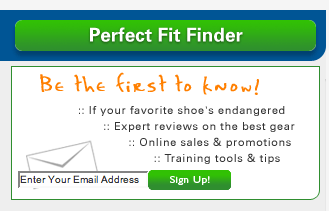
The words “Be the First to Know!” sat just above the fold in the bottom right corner of the site. First to know what? The phrase works because it makes the visitor curious enough to look.

Scrolling down revealed the signup form for the email list. The placement was smart: the teaser asks a question and the form answers it. The welcome email arrived right after signup, which makes the new subscriber feel welcomed into the family at once. Fast delivery is still the most important timing rule for any welcome message.
A subject line that sets expectations
The subject line read “Welcome to the World’s Largest Running Store!” It didn’t need the exclamation point, but it set clear expectations. A runner reading it expects the store to stock everything a runner needs.
“World’s largest” is the company’s own marketing claim. Today the chain runs more than 50 stores in the United States. ScrapeHero, a location data tracker, counted 53 in September 2026.
Thanking the subscriber, not just welcoming them
The welcome letter thanked the reader for subscribing, and that small touch matters. Subscribers feel valued when you thank them as well as welcome them. Signing up is voluntary and people can opt out at any time, so it helps to show that the subscription is appreciated.

Leading with real benefits
The message also laid out benefits. When it was sent, the headline perk was the Perfect Fit™ Guarantee: shoes could be run in and exchanged within 60 days if they did not fit. That was almost unheard of then.
The policy has changed since. Road Runner Sports now describes a 90-day Perfect Fit guarantee for VIP members. They can wear shoes, socks, insoles and Korsa apparel and exchange them for credit toward a different make, style or size. A separate 60-day window covers full refunds on new, unused shoes. If your welcome email promotes a guarantee, quote the current terms exactly, because promises like this change over time.
Mentioning other ways to buy
The email also pointed to a print catalog and the brick-and-mortar stores. Catalog mentions belong to that era of email. The point behind them still holds: some people prefer not to shop online, or want to try products on first. If you offer other ways to buy, such as stores, phone orders or in-store pickup, tell your subscribers. They may be your most loyal customers.
Closing with the VIP offer
The last paragraph explained the VIP club. At the time its benefits included 10% off purchases and free shipping, and the link led to a longer list of perks.
The program is now called VIP Family. Its pages list 10% instant savings, 5% VIP Rewards Cash, free shipping, the 90-day Perfect Fit guarantee and early access to shoe launches. It is a paid membership. The June 2026 terms list an annual renewal fee of $49.99, and introductory prices change from one promotion to the next. A welcome email is a natural place to pitch a loyalty program, as long as the price and renewal terms are stated plainly.
Why this welcome email still works
Welcome letters rarely bring warm feelings or excitement. This one did. It made the company seem as excited to have the subscriber as the subscriber was to join the list. That goal hasn’t changed: the email should feel like a greeting from a store that wants you there, not a receipt.
What a welcome email needs in 2026
The structure above still works: fast delivery, thanks, benefits, other ways to buy and one offer. What changed is the technical side and the way results are measured.
| Area | When this email was sent | November 2026 |
|---|---|---|
| Authentication | Optional for most senders | Gmail and Yahoo require SPF or DKIM for all senders. Bulk senders need SPF, DKIM and DMARC, aligned with the From domain |
| Unsubscribe | Footer link | Visible link plus one-click List-Unsubscribe headers for bulk marketing mail, honored within 2 days |
| Spam complaints | Rarely tracked | Keep the spam rate in Google Postmaster Tools under 0.3%, ideally near 0.1% |
| Inbox placement | One inbox | Gmail has sorted mail into tabs such as Promotions since 2013 and has proxied images since late 2013 |
| Measuring success | Open rate | Clicks, first purchase and signup-to-purchase time, because Apple Mail Privacy Protection (iOS 15, 2021) inflates opens |
| Reading device | Desktop, often Outlook 2007’s limited rendering | Mostly phones, often in dark mode |
Authentication records
Google treats a sender as bulk once it sends about 5,000 messages a day to Gmail addresses. Microsoft uses the same 5,000-a-day threshold for Outlook.com, Hotmail.com and Live.com. Yahoo does not publish a number. The minimum DMARC record looks like this:
_dmarc.example.com. TXT "v=DMARC1; p=none; rua=mailto:[email protected]"
Your email service provider adds the one-click unsubscribe headers. You can check that they appear like this in a test send:
List-Unsubscribe: <https://example.com/unsubscribe?id=123>, <mailto:[email protected]>
List-Unsubscribe-Post: List-Unsubscribe=One-Click
Mobile and dark mode
Keep the welcome email to one column. Make buttons large enough to tap with a thumb, and use logos with transparent backgrounds or a light outline so they don’t disappear on a dark background. Put the thank-you and the main benefit in live text, not in an image, so the message still reads when images load slowly or are blocked.
FAQ
How soon should a welcome email go out after signup?
Right away, triggered by the signup itself rather than a scheduled batch. The subscriber is paying the most attention in the first few minutes, and a fast reply also confirms the address works. A delay of hours makes people forget they signed up, and some will report the email as spam.
Should a welcome email be a single message or a series?
A single message is enough to thank the subscriber and set expectations. A short series of two to four emails lets you spread out the benefits, the loyalty program and the first-purchase offer. Start with one strong message, then add a second email only if it has a different job.
Does a welcome email need an unsubscribe link?
Yes, if it promotes products or services. The FTC’s CAN-SPAM guide requires a clear opt-out and a valid physical postal address in commercial email, and opt-outs must be honored within 10 business days. Gmail and Yahoo go further for bulk senders, requiring one-click unsubscribe processed within 2 days.
Why does my welcome email land in Gmail’s Promotions tab?
Gmail sorts mail by content and sender signals, and a retail welcome email with offers and product images usually counts as promotional. The Promotions tab is not the spam folder, and most subscribers who want deals check it. Focus on authentication, a low complaint rate and content people engage with, not on tricks to escape the tab.
Are welcome email open rates still meaningful?
Not on their own. Since Apple launched Mail Privacy Protection with iOS 15 in 2021, Apple Mail can preload images and record opens that never happened. Track clicks, first purchases and unsubscribes from the welcome email instead.
Should a welcome email include a discount code?
Only if the discount fits your margins and you’re willing to train subscribers to expect deals. A benefit-led welcome, like the fit guarantee and member perks in this example, can work just as well without cutting prices. If you do include a code, state the expiry date and any exclusions in the email itself.
Sources
- Google Workspace Admin Help: Email sender guidelines
- Yahoo Sender Hub: Sender best practices
- FTC: CAN-SPAM Act, A Compliance Guide for Business
- Microsoft Tech Community: Outlook’s new requirements for high-volume senders
- Road Runner Sports: VIP Membership Agreement Terms and Conditions
- Road Runner Sports: VIP Family benefits