
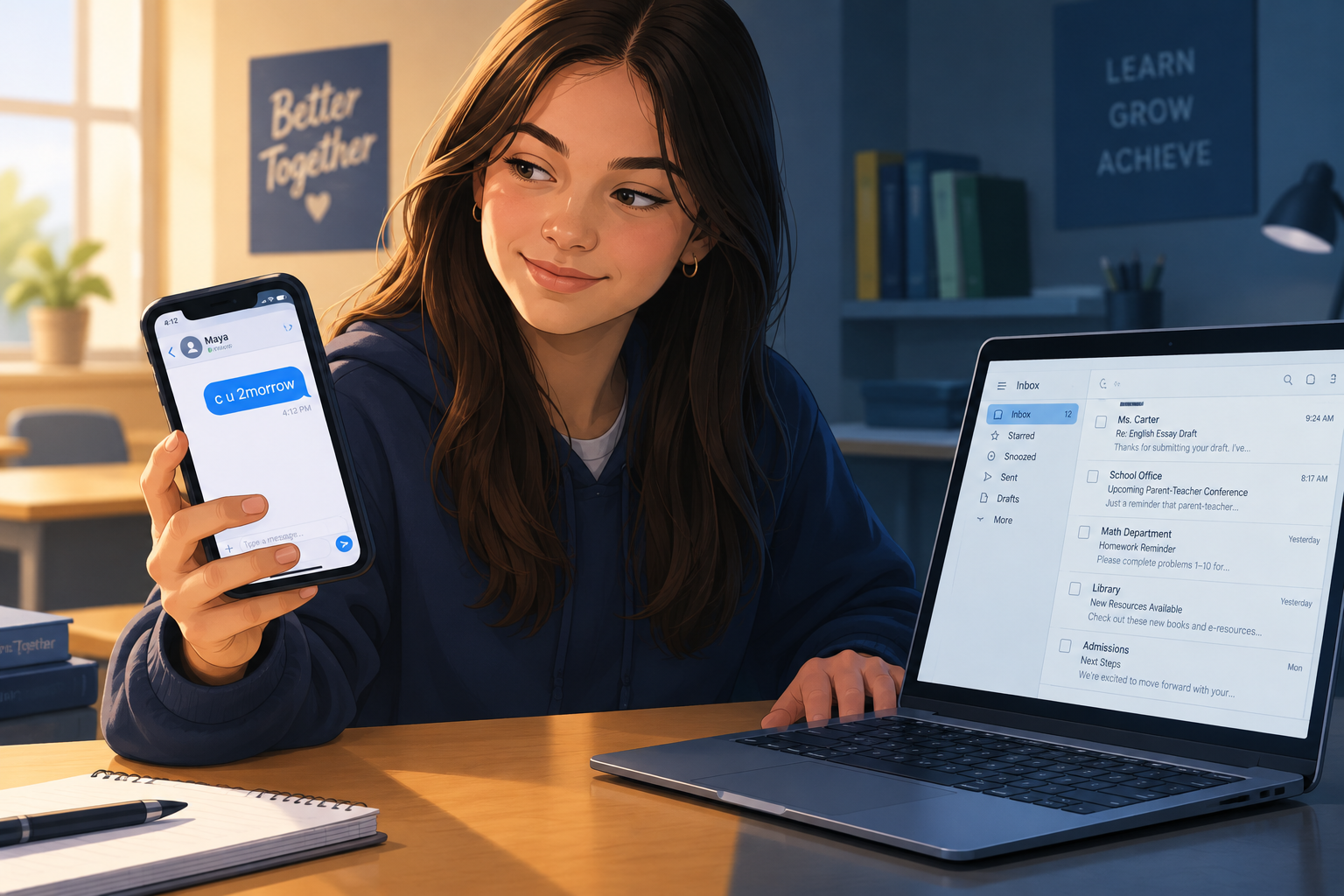
As of November 2026, texting and chat have won the everyday conversation among teens, but email hasn’t gone away. It is where school, jobs, accounts and brand receipts land, and most teens learn to write a more formal email once a teacher or employer expects one. What changed since this post first ran: phones became the main reading screen, Apple Mail Privacy Protection made open rates unreliable, and Gmail, Yahoo and Microsoft now require bulk senders to authenticate with SPF, DKIM and DMARC and offer one-click unsubscribe. If you market to teens, short plain copy that reads well on a phone matters more than ever. Proper punctuation in your own emails still matters too.
What a dinner full of texting teens raised
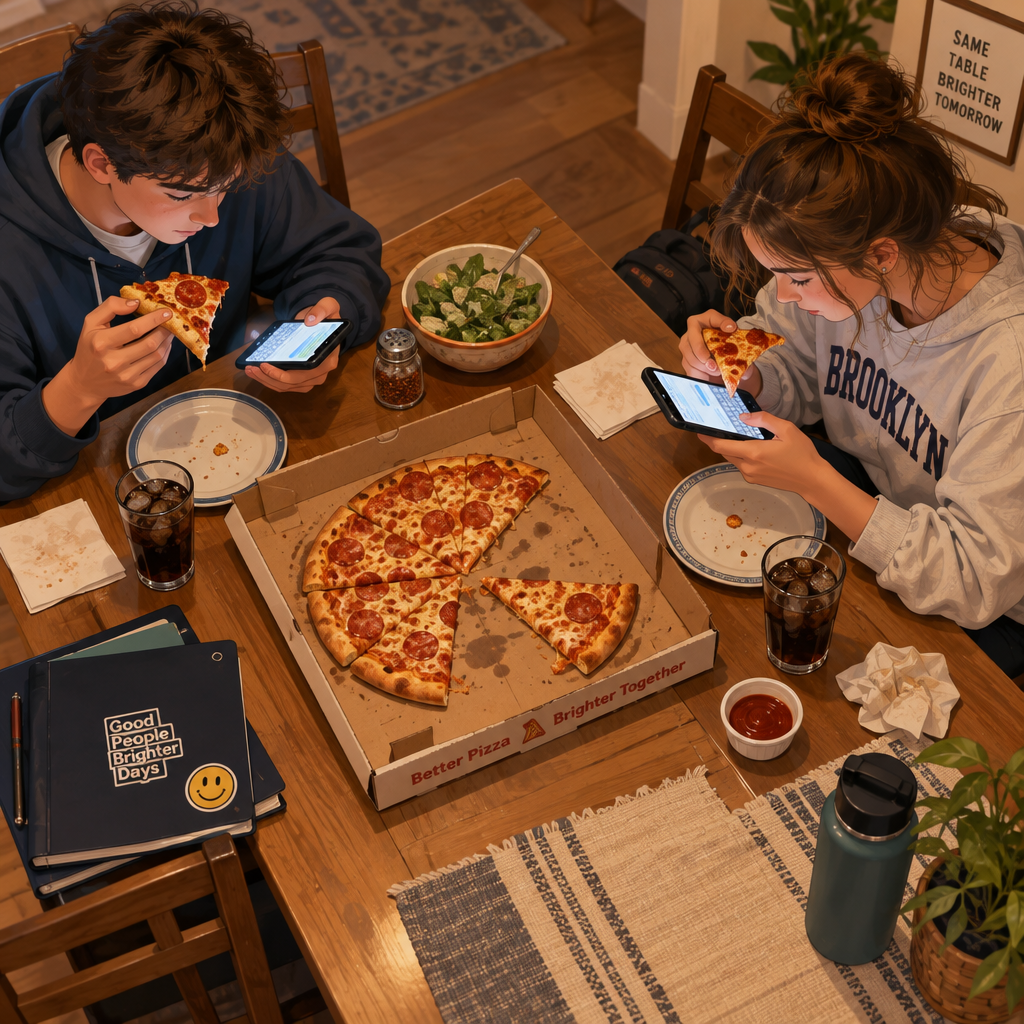
Tiffany Young’s article on iMediaConnection, a marketing publication at the time, looked at how to reach teens through email. Her conclusions matched a familiar scene. At a family dinner, children sat at the table with pizza in one hand and a cell phone in the other, texting at what looked like 100 words a minute.
Their trick for texting fast and still finishing the meal was to shorten every word they could. Messages came out like “what r u doing?” and “nm, c u 2morrow.”
All that shorthand raised a fair question. Will teens remember to capitalize the start of a sentence and end it with proper punctuation? Or will texting take over how they answer email and how they talk face to face?
Young made a strong point: if you get the right message across, teens will click on your emails. The open question was what happens when the 89 percent she cited have to hit the reply button. The common view back then was that email was here to stay. The real question was whether the people using email, and the reasons they used it, were changing.
What the numbers showed then and what they show now
Texting rose fast while this post was new, and teens still live in messaging apps. The data also shows email settling into a narrower but lasting role.
| Period | Source | Key finding |
|---|---|---|
| 2009 | Pew Research Center, Teens and Mobile Phones (800 teens aged 12 to 17, surveyed June 26 to September 24, 2009) | 75% owned a cell phone; 31% sent and received more than 100 texts a day; girls averaged 80 texts a day, boys 30 |
| Feb 2008 to Sept 2009 | Pew Research Center | Daily texting with friends rose from 38% to 54% of teens |
| Sept to Oct 2025 | Pew Research Center, Teens, Social Media and AI Chatbots 2025 (1,458 teens aged 13 to 17) | About 4 in 10 teens said they were online almost constantly; 55% used Snapchat |
| 2025 | ZeroBounce Gen Z at Work report (about 1,400 respondents born 1997 to 2012) | 42% named email their favorite workplace channel; 60% used email to avoid awkward conversations |
The pattern is clear. Casual talk moved to texts, Snapchat and other messaging apps. Email became the channel for school, work, accounts and purchases. That split shapes how younger readers judge your emails. Abbreviations are normal in a chat with friends. In an inbox, sloppy copy looks like spam.
What this means for your teen-facing emails
Write like a person, not a text thread. Short sentences, one clear call to action and a subject line that says what’s inside will beat “OMG” shorthand, which comes across as a brand trying too hard.
- Design for the phone first: one column, large tap targets and text that stays readable in dark mode.
- Keep the main offer at the top, because the inbox preview shows only the first line or two.
- Track clicks and conversions, not opens. Apple Mail Privacy Protection, launched with iOS 15 in September 2021, preloads images, so opens come out inflated.
- Ask for an email address at the moments teens actually use one, such as an order confirmation or account signup.
The rules that apply when the audience is young
Age changes your legal duties. In the US, the Children’s Online Privacy Protection Act (COPPA) covers collecting personal information, including email addresses, from children under 13 without verifiable parental consent. The FTC’s amended COPPA Rule took effect on June 23, 2025, and the compliance deadline for most of its new requirements was April 22, 2026.
CAN-SPAM applies to every commercial email whatever the reader’s age. You need accurate header and subject lines, a valid postal address and a working opt-out that you honor within 10 business days.
The mailbox providers add their own rules. Since February 2024, Gmail and Yahoo have required senders of 5,000 or more messages a day to authenticate with SPF, DKIM and DMARC, offer one-click unsubscribe, honor unsubscribes within two days and keep spam complaint rates below 0.3%. Microsoft began enforcing similar authentication rules for Outlook.com, Hotmail.com and Live.com on May 5, 2025.
FAQ
Do teens still use email at all?
Yes, though mostly for school, work, accounts and shopping rather than chatting with friends. Older SendGrid research covering ages 13 to 21 found that 85% used email at least monthly, and in ZeroBounce’s 2025 survey 42% of Gen Z named email their favorite workplace channel. Expect them to read your emails, but not to treat the inbox like a chat app.
Should marketing emails to teens use texting slang?
Usually not. Shorthand like “u” and “2morrow” comes across as forced from a brand and can look like spam. Clear, short, friendly copy works better and keeps your emails credible with parents too.
Can you email teens under 13?
Not without care. Collecting an email address from a child under 13 for marketing usually requires verifiable parental consent under COPPA. The FTC’s amended rule has been fully enforceable since April 22, 2026, so check your signup forms and age screening before you build a young list.
Are open rates reliable for measuring teen engagement?
No. Apple Mail Privacy Protection preloads images and inflates opens, and many teens read on iPhones. Use clicks, conversions and replies as your main signals.
What do Gmail and Yahoo require from senders today?
Since February 2024, senders of 5,000 or more messages a day must authenticate with SPF, DKIM and DMARC. They must also offer one-click unsubscribe, honor opt-outs within two days and keep spam complaints below 0.3%. Every sender needs SPF or DKIM, and following the full set protects your deliverability even at low volume.
Sources
- Google: Email sender guidelines (Gmail Help)
- Yahoo Sender Hub: Sender Best Practices
- Microsoft Outlook Blog: Outlook’s new requirements for high-volume senders (April 2, 2025)
- Federal Trade Commission: CAN-SPAM Act, A Compliance Guide for Business
- Federal Trade Commission: Children’s Online Privacy Protection Rule (COPPA)
- Pew Research Center: Teens and Mobile Phones (April 20, 2010)
- Pew Research Center: Teens, Social Media and AI Chatbots 2025 (December 9, 2025)