
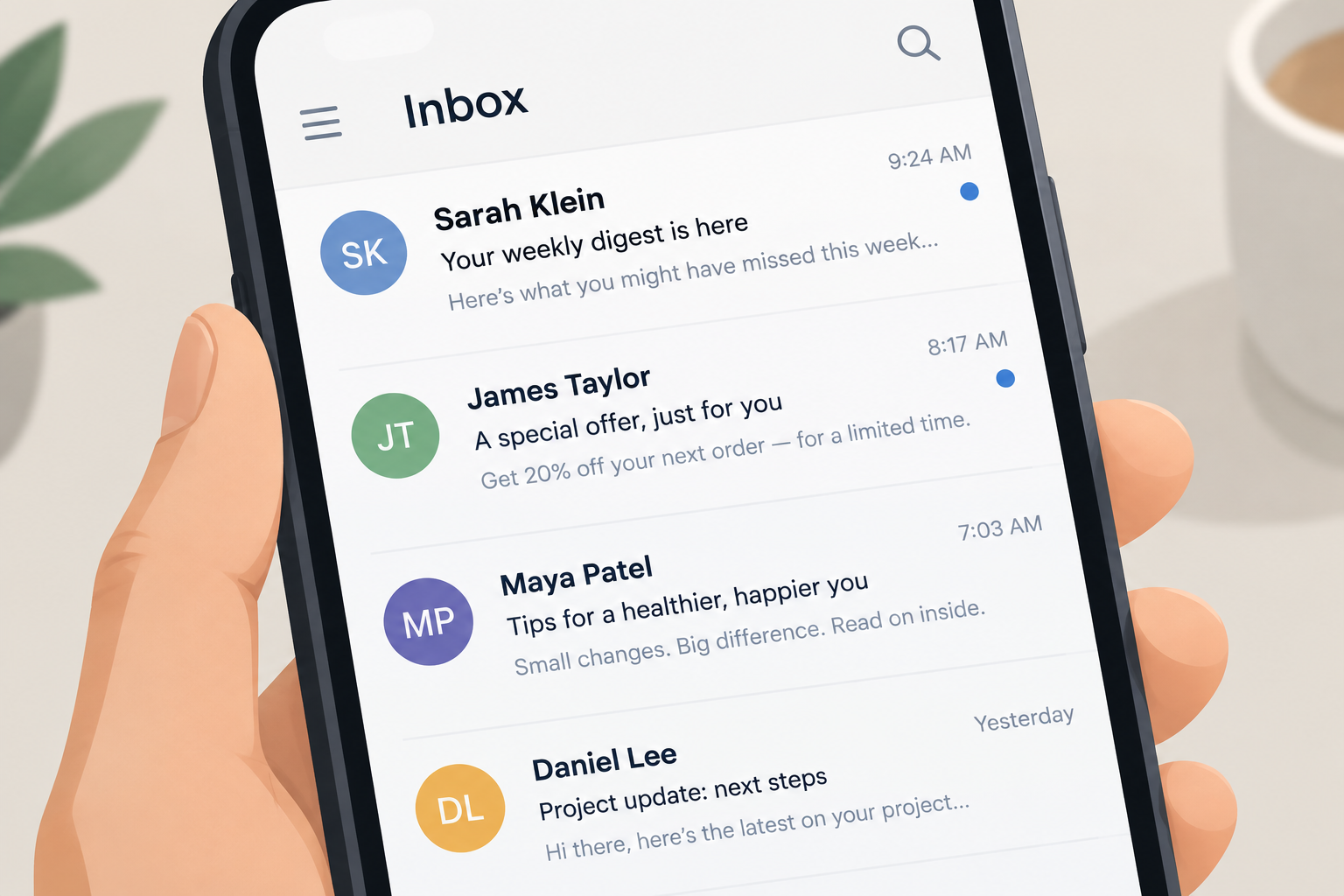
The From Name is the first thing your subscribers look at before they decide to open, ignore or report your email, so it should be your brand name (or a real person paired with the brand), easy to recognize, and the same every time. Since this post first ran, the From line has also become part of your authentication. Under the 2024 Gmail and Yahoo bulk sender rules, you have to publish a DMARC record, and the domain in your From address has to align with either the domain authenticated by SPF or the domain that signs with DKIM. Microsoft added similar rules for Outlook.com in May 2025. Apple Mail Privacy Protection also inflates open rates, so open rates alone can no longer tell you whether a new From Name works.
Email marketers know how much the subject line matters in getting messages opened. Even so, the cleverest subject line won’t help if your subscribers can’t tell who the message is from.
Don’t let your From Name stand between you and the open. Before you press send, decide who the message should come from.
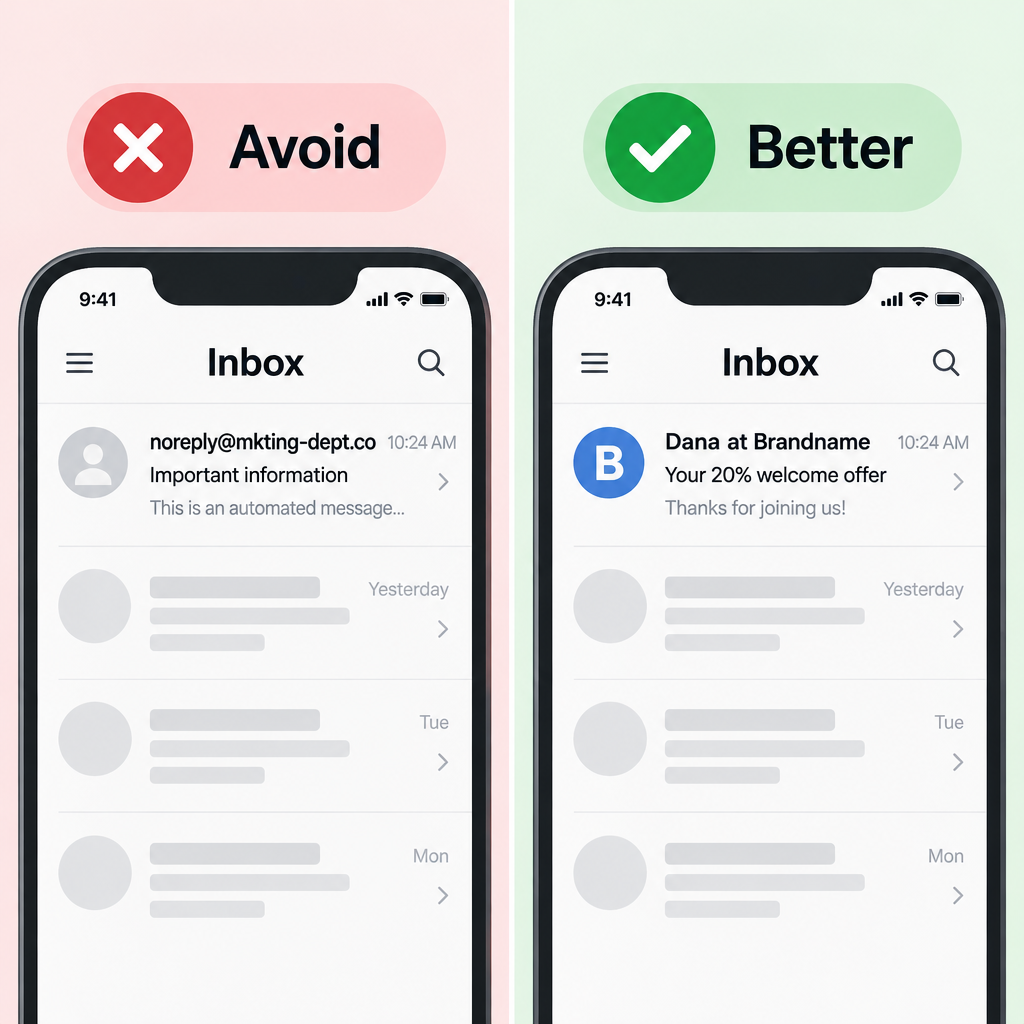
Here’s a common example. You sign up for a brand’s newsletter, and a few weeks later the first issue arrives with no From Name at all. All you see is an email address belonging to the parent company’s marketing department, not the brand you signed up with. Add a dull subject line and that message is one tap away from the trash, or worse, the “Report spam” button.
What your From Name should be
A good From Name meets three tests: it’s relevant, it’s recognizable, and it’s consistent.
It should make sense for the message. Should the email come from a person or from the brand? Let the type of message decide. A newsletter, promotion or receipt usually works best from the brand. A founder’s note, an account manager’s check-in or a B2B follow-up can come from a person, but pair the name with the brand (“Dana at Brandname”) so subscribers aren’t left guessing.
Subscribers should see straight away that the message is from your brand. Use the name they signed up with, not a parent company, a department or a bare email address. Keep it short, because long names get cut off in phone inbox lists. Most email is now read on a phone, often in dark mode, so the name is doing more work than it did on a desktop screen.
The recognition test now goes past the name itself. Mailbox providers check the domain behind the name:
- Authentication. Gmail and Yahoo require bulk senders to authenticate with SPF and DKIM and publish DMARC, with the From domain aligned. Gmail counts you as a bulk sender once you send 5,000 or more messages a day to Gmail addresses. Microsoft began enforcing similar rules for Outlook.com, Hotmail.com and Live.com on May 5, 2025, for domains sending more than 5,000 emails a day.
- Logos. With BIMI, your logo can appear next to your From Name in Gmail, Yahoo and other supporting inboxes. BIMI requires DMARC at
p=quarantineorp=reject. Gmail’s blue checkmark also needs a Verified Mark Certificate, which usually means a registered trademark. - Apple Mail. Since iOS 18.2, Apple’s Branded Mail (set up through Apple Business Connect) can show a verified logo and business name in Apple Mail.
A minimal DMARC record at the enforcement level BIMI needs looks like this:
_dmarc.example.com. TXT "v=DMARC1; p=quarantine; rua=mailto:[email protected]"
The From line also has a legal side. The FTC’s CAN-SPAM guide says header information, including the From name and address, must not be false or misleading and must accurately identify the person or business sending the message. Each violating email can cost more than $53,000 in civil penalties.
Send from the same From Name every time. Subscribers learn to recognize and trust it, and over time they start looking out for your messages in a crowded inbox. Changing it confuses people. Confused subscribers ignore mail or report it as spam, and spam reports now carry real weight. Google says senders whose user-reported spam rate goes above 0.3% lose access to its mitigation support, and it suggests staying below 0.1%.
If you have to change your From Name, for example after a rebrand, do it in steps. Tell subscribers in advance, keep the sending domain the same, and use a bridge format such as “NewName (formerly OldName)” for a few sends.
Treat your From Name as valuable real estate. Make it a deliberate part of your messaging strategy and you’ll see the results in opens, clicks and inbox placement.
FAQ
Should my From Name be a person or the brand?
For most marketing email, use the brand, because that’s the name subscribers signed up with. A person’s name can lift engagement on personal-style messages such as founder notes or sales follow-ups, but “First name at Brand” keeps recognition intact. A first name on its own, from a sender the reader doesn’t know, tends to get ignored or reported.
How long should a From Name be?
As short as it can be while staying clear. Phone inbox lists cut off long names, so put the brand first and drop extra words like “Newsletter” or “Team” unless they help people tell your streams apart. Preview the name on a phone in both light and dark mode before you settle on it.
Can I use different From Names for different types of email?
Yes, as long as each one is clearly your brand and stays the same within its stream, for example “Brand” for promotions and “Brand Support” for account mail. Many senders also use separate subdomains for marketing and transactional mail, so complaints about promotions don’t hurt delivery of receipts and password resets. What hurts is rotating names at random, which looks like spam to subscribers.
How do I test whether a new From Name works?
Run an A/B test, but judge it on clicks, conversions and spam complaints rather than opens. Since Apple Mail Privacy Protection launched with iOS 15 in September 2021, Apple Mail preloads images, which records many messages as opened whether anyone read them or not. Open rates from tests can look inflated and unreliable as a result.
Does a no-reply From address hurt deliverability?
Gmail and Yahoo don’t ban no-reply addresses, but they do weigh engagement and spam complaints. A no-reply address shuts off replies, and some subscribers will report the email instead. A monitored reply address is the safer choice and fits a recognizable From Name better.
Does my From address need to match my sending domain?
For bulk mail to Gmail, Yahoo and Outlook.com, yes. The domain in your From address must align with the domain authenticated by SPF or DKIM, and DMARC must be published for that domain. Most ESPs walk you through this when you authenticate your domain in their settings.
Sources
- Google Workspace Admin Help: Email sender guidelines FAQ
- Yahoo Sender Hub: Best practices
- Microsoft Tech Community: Outlook’s new requirements for high-volume senders
- FTC: CAN-SPAM Act, A Compliance Guide for Business
- Twilio SendGrid Docs: Understanding Apple Mail Privacy Protection and open events