
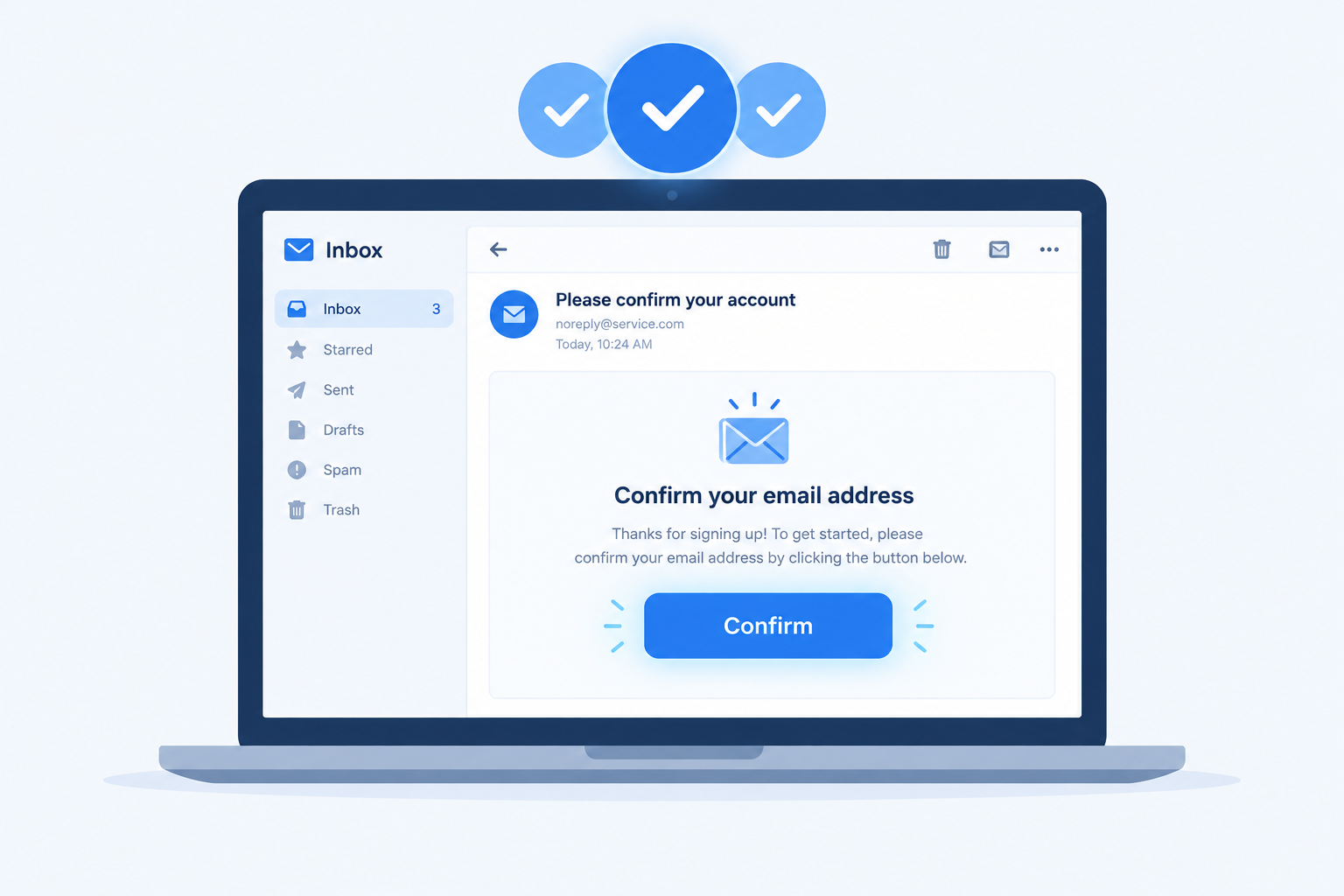
“Triple opt-in” isn’t a real standard. It’s a nickname for what happens when a sender runs its double opt-in flow a second time after a subscriber changes their email address. As of November 2026, confirming a new address is still the right move: it proves the person owns the inbox, catches typos and protects list quality. What goes wrong is the wording. A confirmation that reads like a fresh signup confuses people who already have an account.
The rules around this have tightened since this post was first written. Google now tells senders to use double consent for subscription mail. Since February 2024, Gmail has required bulk senders to have SPF, DKIM and DMARC, one-click unsubscribe and a spam rate below 0.3%, and Yahoo rolled out similar requirements in the first quarter of 2024. Since May 5, 2025, Microsoft’s Outlook.com has enforced similar authentication requirements for domains sending more than 5,000 messages a day.
How the gaming email review started
The story began with a competitive review of email programs in the video game industry. The goal was to learn what worked for publishers and developers, and where their competitors fell flat. That meant subscribing to a long list of gaming newsletters and taking detailed notes on how each one ran its email.
Most of these programs were solid. Signing up was usually painless, the emails were engaging, and every one of them complied with CAN-SPAM. As a group, they also knew when to cut back on sends to subscribers who had stopped responding or gone inactive.
The address change that set off a new confirmation
The SEGA emails turned out to be going to a personal inbox when they belonged in the work inbox with the other B2C research mail. Fixing that meant logging back into the SEGA account and updating the address, which was quick and easy.
Soon after, SEGA sent another email asking for a re-opt-in. It read:
“To activate your account and join the SEGA PASS community click the confirmation link below:”
That message didn’t fit the situation. The account was already active. Updating the address had put it back through the double opt-in flow as if it were a brand-new signup, which in effect made it a “triple opt-in.”
There are two likely explanations. Either SEGA did it on purpose to keep the list clean, or nobody tested the address-change path and it simply reused the signup email. In either case, the confirmation step itself was fine. The copy was the problem.
SEGA PASS is history now. It was the account service run by SEGA Europe, and SEGA suspended it in June 2011 after a breach exposed names, birth dates, email addresses and encrypted passwords for about 1.29 million users. The lesson about confirmation copy still applies to any sender.
A better confirmation message for updated addresses
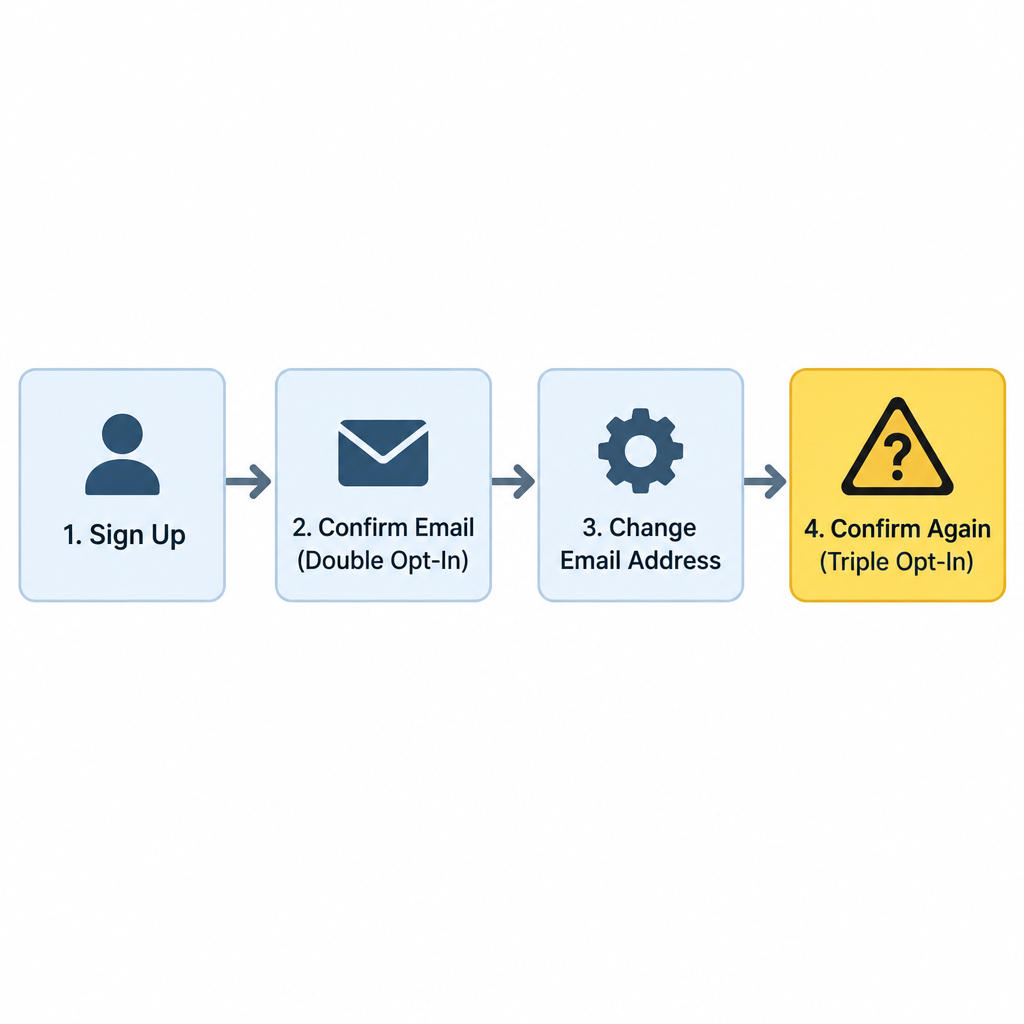
A small change in wording would have cleared up the confusion. Something like this:
“Thanks for updating your profile. Confirm your change below:”
This version tells the subscriber why the email arrived. It also connects the message to something they just did, and it makes clear their account and preferences are safe. A few more details make it work even better:
- Use a subject line that names the action, such as “Confirm your new email address.”
- Show the new address in the body so the subscriber can spot a typo.
- Keep sending to the old address until the new one is confirmed. That way nobody falls off the list partway through the change.
- Send a short notice to the old address saying the change was requested. If someone else made the change, the real owner finds out.
- Keep the email free of marketing content. It’s a transactional message, and promotions make it look like spam.
Is the annoyance fair
Mostly, yes. Asking a subscriber to confirm a new address is good practice, and today it’s close to expected. Google’s subscription guidelines tell senders to have people confirm their address before sending subscription mail. Under GDPR, you have to be able to prove consent, and a confirmed address is the easiest way to do that.
What annoys people is copy that ignores what they actually did. An existing customer who gets an “activate your account” email can reasonably worry that their account was reset, that their history is gone, or that the email is a phishing attempt. The fix costs one template and a quick test of the address-change flow. Run that test once a year on every path that sends an email: signup, address change, preference update and unsubscribe.
FAQ
What is triple opt-in in email marketing?
It’s an informal name, not an industry standard. People usually mean a double opt-in that runs again when a subscriber changes their email address, or a signup flow with one extra confirmation step on top of double opt-in. Few senders build a triple step on purpose, because each extra step loses some real subscribers.
Should you ask subscribers to confirm a changed email address?
Yes. Confirming the new address proves the subscriber owns it, catches typos before they turn into bounces, and makes it harder for someone else to redirect an account’s mail. Write the message as a confirmation of the change, not as a new signup, and keep the old address active until the new one is confirmed.
Does CAN-SPAM require double opt-in?
No. CAN-SPAM is an opt-out law. It requires accurate header and subject information, a valid physical postal address, a working unsubscribe method, and honoring opt-outs within 10 business days. The FTC’s maximum civil penalty for 2026 is $53,088 per violation. That is the 2025 inflation-adjusted figure, which the FTC kept in place for 2026. Each separate email that breaks the law counts as a separate violation. Double opt-in comes from mailbox provider guidance and from consent laws such as GDPR, not from CAN-SPAM.
Do Gmail and Yahoo require double opt-in?
Neither one makes it a hard technical rule. Google’s email subscription guidelines do tell senders to have people confirm their address before sending them subscription mail, and to honor unsubscribe requests within 48 hours. For bulk senders (those sending close to 5,000 or more messages to personal Gmail accounts in a 24-hour period), the requirements are SPF, DKIM and DMARC, one-click unsubscribe for marketing and subscribed messages, and a reported spam rate below 0.3%, with Google recommending staying below 0.1%. Yahoo’s requirements are similar.
Is a confirmation email for an address change marketing or transactional?
It’s transactional, because it confirms an action the subscriber took. Keep it plain: a clear subject, the new address, one confirmation button and no promotions. That keeps it out of promotional filtering and makes it look trustworthy next to phishing emails that copy account notices.
Does double opt-in hurt list growth?
It lowers raw signup numbers, because some people never click the confirmation link. The subscribers who do confirm are real, reachable and less likely to mark your mail as spam, which helps you stay under the 0.3% complaint ceiling. For most senders, that trade is worth it.
Sources
- Google: Email subscription guidelines for senders
- Google Workspace Admin Help: Email sender guidelines FAQ
- Microsoft Tech Community: Outlook’s new requirements for high-volume senders
- Federal Register: FTC adjustments to civil penalty amounts (January 17, 2025)
- FTC: CAN-SPAM Act, A Compliance Guide for Business
- SANS Internet Storm Center: Sega Pass compromised, 1.29 million customers’ data leaked