
Partly, yes. Email still spreads by word of mouth when people forward a message they care about, but its real strength in 2026 is as a channel you own: people choose to receive it, and it reaches them directly. That makes it a better follow-up tool than a viral one. Since this post was first written, the rules have changed a lot. Gmail sorts mail into tabs and loads images through its own servers, Apple Mail Privacy Protection inflates open rates, and since 2024 Gmail and Yahoo have required authenticated sending (SPF, DKIM, DMARC), one-click unsubscribe and spam complaint rates below 0.3%.
Why marketers asked the question in 2006
Email marketing had been growing for several years by 2006, but the evidence on its return was mixed. So marketers asked whether that year would bring more certainty. Research pointed to reach as one of the factors that decide whether a campaign works. Email gave marketers a cheap way to reach new people in an old market, because every subscriber could pass a message on to friends, family and colleagues.
That idea of the forwarded message as digital word of mouth is what the case below shows.
How one memorial foundation used email
In a case study from that period, a viral email led readers to the website of the Ryan Andrew Kaiser Memorial Foundation (RAKMF), a moving and carefully built site. According to the case study, the foundation used email as its main marketing and communication hub. Its personal emails had a greater effect than all of its other marketing combined, and they brought in a large number of visitors and charitable gifts. The foundation still holds trademarks for its fundraiser “Ryan’s Run: A Run for the Heart.”
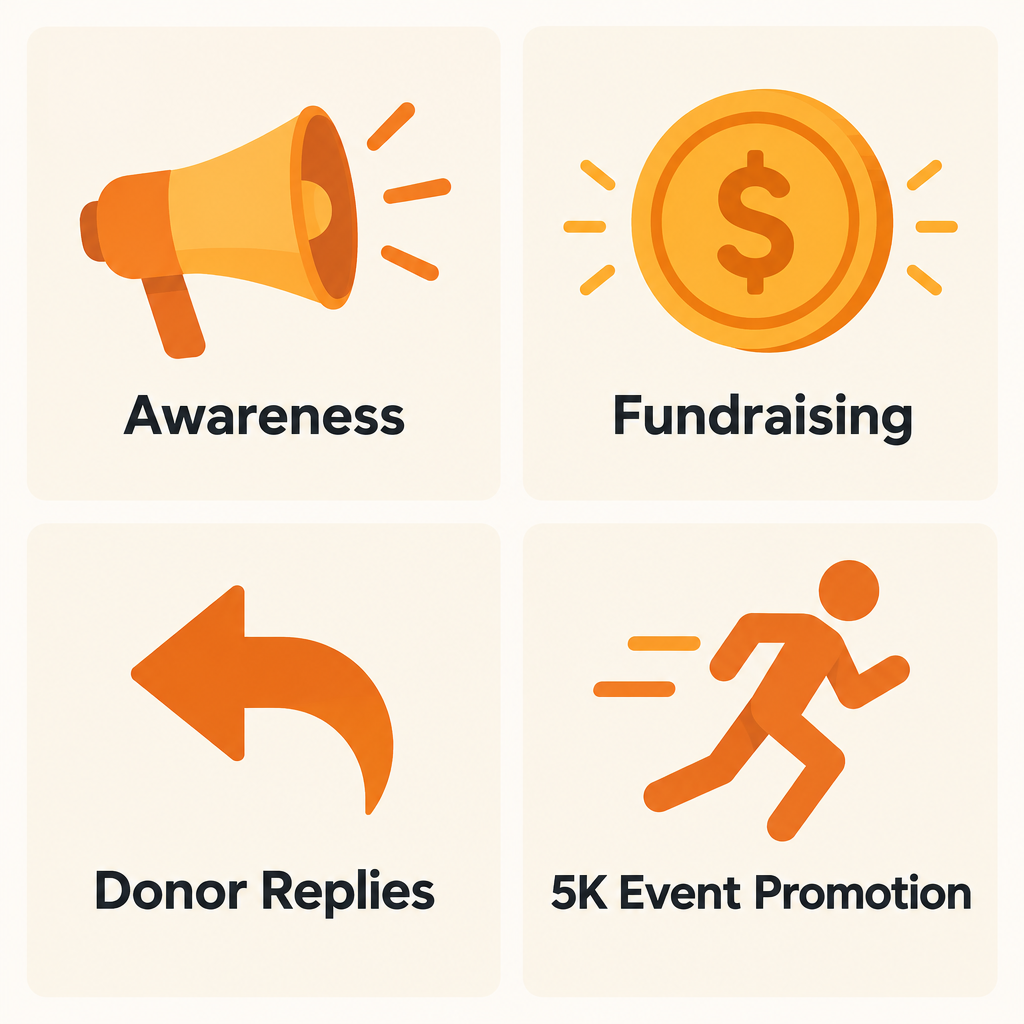
RAKMF used email in four distinct ways.
1. Email as an awareness vehicle
The first job was getting the word out about the cause.
2. Email to raise financial support
The second goal was to bring in donations.
3. Replying to donors by email
The foundation thanked and answered its donors by email.
4. Promoting a 5K run in New Jersey
Email also promoted the foundation’s 5K run in New Jersey.
What the case still teaches, and what has changed
RAKMF’s success suggested that email marketing had much more to offer in later campaigns, and the basic lesson still holds. Personal, heartfelt messages sent to people who already care get forwarded, and forwarded mail is still the closest thing email has to word of mouth. Two things have changed: the mechanics around that lesson, and the way results are measured.
| Area | 2006 | November 2026 |
|---|---|---|
| Inbox placement | One inbox; filters looked mostly at content | Gmail’s Primary and Promotions tabs (since 2013); filters weigh authentication and engagement |
| Sender rules | No mailbox provider rules on authentication | Gmail and Yahoo bulk sender rules since February 2024; Outlook.com rules for 5,000+ messages a day since May 5, 2025 |
| Unsubscribe | A link in the footer | Visible link plus one-click unsubscribe (RFC 8058); bulk senders must honor requests within 2 days |
| Measuring success | Open rate | Clicks, donations and replies; opens are inflated by Apple Mail Privacy Protection (since iOS 15, 2021) |
| Reading device | Desktop clients | Mostly phones, often in dark mode |
| U.S. law | CAN-SPAM (2003) | CAN-SPAM still applies; maximum penalty $53,088 per violation, unchanged for 2026 |
For a nonprofit like RAKMF, current benchmarks set realistic expectations. M+R Benchmarks 2026 puts average fundraising email performance at a 0.59% click-through rate and a 0.05% response rate. Advocacy email does much better, at 2.3% clicks and 1.4% response. One message rarely moves the needle on its own. A steady series of personal updates, thank-you notes and event reminders, like RAKMF’s four uses, builds the relationship that makes people give.
If you want the word-of-mouth effect today, give subscribers something worth passing on. That means a clear story, a single ask, a working share or forward option, and a signup link people can find when the message reaches them second-hand. Then make sure your domain is authenticated, so the forwarded message does not land in spam.
FAQ
Does forward-to-a-friend still work in email marketing?
Yes, but it works best for personal or emotional content, like the memorial emails in this case. Most people forward from their own mail app rather than through a “forward” button in the email. So put a signup link in every message, so new readers who get it second-hand can subscribe themselves. Never add the people your subscribers forward to into your list without their own consent.
What do the Gmail and Yahoo sender rules require?
Since February 2024, everyone sending to Gmail must authenticate with SPF or DKIM and keep the spam rate shown in Postmaster Tools below 0.3%. Bulk senders, which Google defines as those sending 5,000 or more messages a day to Gmail, need SPF, DKIM and DMARC, plus one-click unsubscribe on marketing mail. Yahoo sets the same 0.3% complaint limit and the same two-day deadline for unsubscribes, but it does not publish a volume threshold. A minimal DMARC record looks like this:
_dmarc.example.org TXT "v=DMARC1; p=none; rua=mailto:[email protected]"
Are open rates still a reliable measure of success?
No. Apple Mail Privacy Protection loads images ahead of time, which records an “open” whether or not the person read the email, so open rates for Apple Mail users are inflated. Judge campaigns by clicks, conversions, donations and replies instead. Treat opens as a rough trend line at best.
Do nonprofits have to follow CAN-SPAM?
CAN-SPAM covers commercial messages. A charity’s purely relational or fundraising emails can fall outside its narrowest definitions, but event promotions and merchandise offers can count as commercial. The safe course is to follow the FTC’s basics on every send: honest sender and subject lines, a physical postal address, and an opt-out that works and is honored within 10 business days. The maximum civil penalty stays at $53,088 per violating email for 2026.
How should a small charity start an email program today?
Use an email service provider instead of a personal mailbox. Authenticate your sending domain with SPF, DKIM and DMARC before your first campaign, and only collect addresses from people who opt in. Then follow a rhythm much like RAKMF’s: tell the story, make a clear ask, thank donors personally and promote real events.
Sources
- Google: Email sender guidelines
- Yahoo Sender Hub: Sender best practices
- Microsoft Tech Community: Outlook’s new requirements for high-volume senders
- FTC: CAN-SPAM Act, A Compliance Guide for Business
- Federal Register: FTC civil penalty inflation adjustments, September 15, 2026
- M+R Benchmarks 2026: Email messaging